

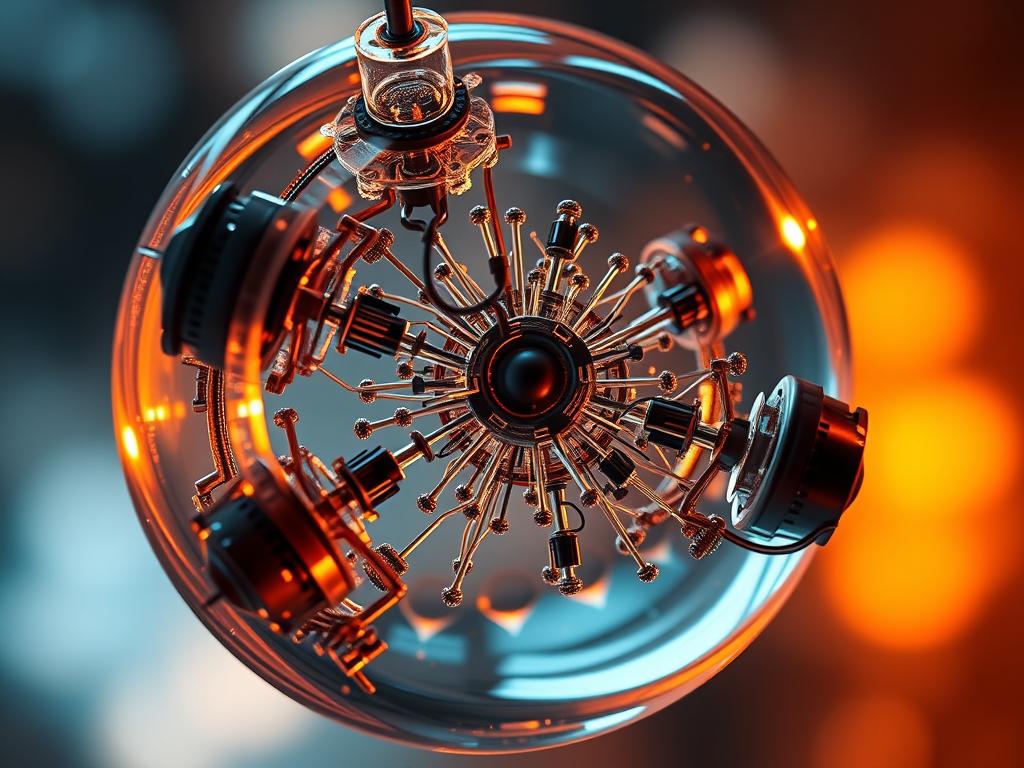
Scientists are making big strides in medicine with gene editing and nanotechnology. CRISPR is a key tool that lets researchers change DNA with great precision. This is starting a new chapter in treating diseases.
Nanomedicine adds to this by delivering drugs at the molecular level. Together, CRISPR and nanomedicine are changing how we fight diseases.
CRISPR and nanotechnology are making personalized medicine possible. They let scientists create treatments that fit each person’s genes. This is a big step forward in treating genetic diseases, cancer, and infections.
We’ll look into how CRISPR and nanotechnology work. We’ll see how they’re used today and what challenges they face. Let’s explore how these technologies can change healthcare for the better.
Introduction to CRISPR Nanomedicine
Recently, precision medicine has made big strides. This is thanks to genome engineering and nanomedicine. The CRISPR-Cas9 system is a key tool in this field. It lets us edit genes with great accuracy and speed.
Defining CRISPR Technology
CRISPR stands for Clustered Regularly Interspaced Short Palindromic Repeats. It’s a way bacteria defend themselves. The CRISPR-Cas9 system uses a guide RNA to find and cut DNA. This lets us change, delete, or add genes, which is great for treating diseases.
Overview of Nanomedicine
Nanomedicine uses tiny particles for medical purposes. These particles are smaller than 100 nanometers. They can carry drugs or genes to specific places in the body. This makes treatments more effective and reduces side effects.
The Intersection of CRISPR and Nanotechnology
CRISPR and nanomedicine together could change healthcare a lot. They let us make precise gene therapies for many diseases. This could also help in fighting cancer by targeting it with edited cells or genes.
Mechanisms of CRISPR in Medicine
CRISPR technology has changed the game in gene editing. It offers precise and efficient ways to change DNA. When paired with nanomedicine, CRISPR can create targeted treatments for many genetic diseases.
How CRISPR Works in Gene Editing
The CRISPR-Cas9 system comes from bacteria’s immune system. It uses a guide RNA (gRNA) to find a specific DNA spot. Then, the Cas9 enzyme breaks the DNA.
This break can be fixed in two ways. Non-homologous end joining (NHEJ) can knock out genes. Homology-directed repair (HDR) can make precise changes to genes.
Delivery Mechanisms in Nanotechnology
Getting CRISPR to the right cells is a big challenge. Nanotechnology has come up with nanocarriers like lipid and polymeric nanoparticles. These tiny carriers can deliver CRISPR-Cas9 to specific cells or tissues.
Synergistic Effects of CRISPR and Nanomedicine
CRISPR and nanomedicine work together to make gene editing better. Nanocarriers protect CRISPR and help it reach the right cells. They also reduce off-target effects by making gene editing more precise.
Applications of CRISPR Nanomedicine
CRISPR technology and nanomedicine have changed healthcare. They could change how we treat genetic disorders, cancer, and infections.
CRISPR nanomedicine is great for treating rare diseases. It uses CRISPR’s precision and nanoparticles’ delivery. This could help people with diseases that were once untreatable.
Treating Genetic Disorders
CRISPR nanomedicine can fix many genetic disorders. It’s being tested on sickle cell anemia, cystic fibrosis, and more. Nanoparticles help get the treatment to the right cells, making it more effective.
Innovations in Cancer Treatment
Cancer immunotherapy is a big step forward. CRISPR nanomedicine could make it even better. For example, it can make immune cells target cancer cells more precisely. Nanoparticles help get these cells to the tumor.
Advancements in Infectious Diseases
CRISPR nanomedicine is also good for fighting infections. It’s being used to make new treatments for viruses like HIV. This could lead to better ways to fight these tough infections.
Challenges and Ethical Considerations
CRISPR nanomedicine is very promising for changing healthcare. But, it also brings big challenges and ethical issues. It’s important to handle these carefully as we move this tech to clinics.
One big worry is off-target effects. These are changes to the genome that weren’t meant to happen. They could cause health problems. Scientists are trying to make gene editing tools better to avoid these risks.

Ethical Implications of Gene Editing
CRISPR lets us change the human genome. This raises big ethical questions, like germline editing. Changes to the germline affect future generations. We need to think deeply about this and talk openly to use this tech wisely.
Navigating Regulatory Frameworks
As CRISPR nanomedicine gets closer to clinics, it must follow strict rules. Agencies like the FDA are key in making sure these new treatments are safe and work well. It’s important for scientists, companies, and regulators to work together to set good rules.
Dealing with these challenges and ethics is key for CRISPR nanomedicine to move forward right. By focusing on safety, talking about ethics, and following strong rules, we can use this tech to help people. And we can do it in a way that’s safe for everyone.
Case Studies in CRISPR Nanomedicine
CRISPR nanomedicine has made big strides in recent years. Many clinical trials and research projects show its huge promise. They aim to change healthcare for the better.
One big success is treating sickle cell anemia with CRISPR. A trial used CRISPR to fix the genes causing this disease. It changed stem cells to make normal hemoglobin, helping patients.
Innovative Cancer Treatments
CRISPR is also a game-changer for cancer treatments. It can target cancer cells with great precision. This means less harm to healthy cells and better results.
Studies show CRISPR can turn off bad genes and turn on good ones. This could lead to more effective cancer treatments.
Combating Infectious Diseases
CRISPR is also being used to fight infectious diseases. It might help find a cure for HIV by removing the virus from cells. This could stop HIV from coming back.
These findings show CRISPR’s wide range of uses. It could help solve many health problems.
More trials and research are needed to fully use CRISPR’s power. These examples show its huge promise. They encourage more work to bring these treatments to patients.
Future Directions in CRISPR Nanomedicine
The field of CRISPR nanomedicine is growing fast. New technologies and techniques are coming out quickly. This makes the future of healthcare look very promising.
Base editing and prime editing are big news in CRISPR nanomedicine. They let researchers edit genes more precisely. This means they can fix genetic problems without causing big damage to DNA.
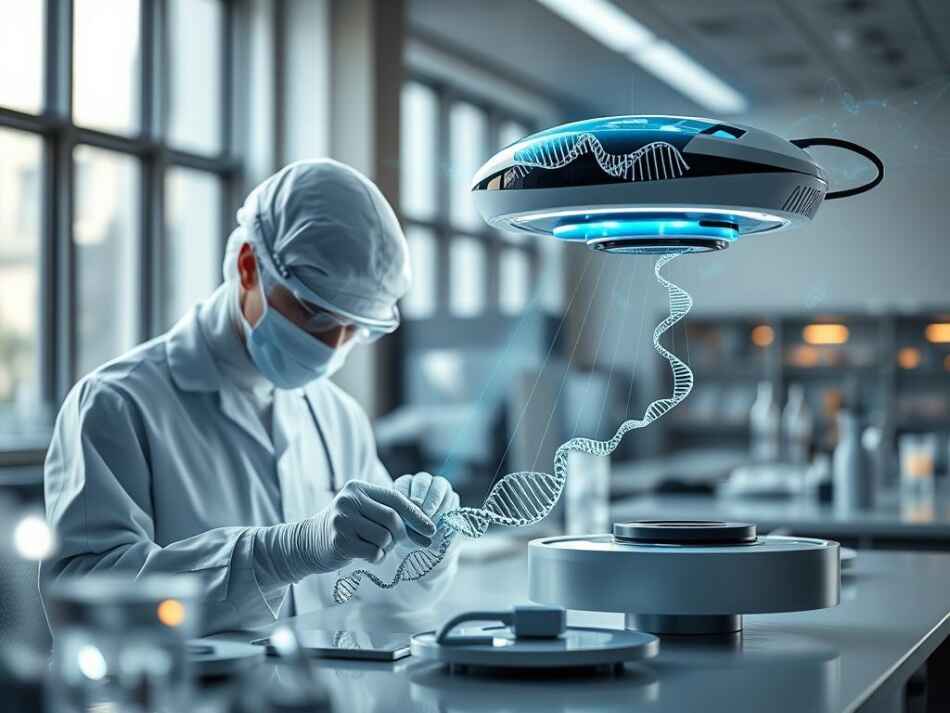
Personalized therapies are another exciting area. They use CRISPR nanomedicine to tailor treatments to each person’s genes. This could change how we treat diseases, making treatments more effective and specific.
CRISPR nanomedicine is also being mixed with other treatments. This includes immunotherapy and stem cell therapy. Researchers think this mix could lead to better treatments for diseases like cancer and autoimmune disorders.
Lastly, CRISPR nanomedicine is key in regenerative medicine. It aims to fix and grow new tissues. This could help treat many conditions, from spinal cord injuries to neurodegenerative diseases.
As research goes on, CRISPR nanomedicine’s future looks bright. It has the power to change healthcare a lot. This field will keep being a big part of science for a long time.
Impact on Healthcare Systems
CRISPR nanomedicine is changing healthcare around the world. It’s important to look at how it affects healthcare costs, patient access, and old treatment ways. This new tech promises to make medicine more precise, fitting treatments to each person’s needs and genes.
One big worry is the cost of CRISPR nanomedicine. These new treatments could be very helpful but are expensive to make. Healthcare systems must find new ways to pay for these treatments so everyone can get them, no matter their money situation.
Despite the costs, CRISPR nanomedicine’s benefits are huge. It can make treatments more effective and save money in the long run. As healthcare moves towards focusing on value and results, CRISPR nanomedicine could lead the way.
Accessibility for Patients
Getting CRISPR nanomedicine to patients will be a big challenge. Governments, healthcare providers, and insurance companies must work together. They need to create fair payment plans for these new treatments. This way, everyone who could benefit from CRISPR nanomedicine can get it.
Role of AI in CRISPR Nanomedicine Research
Artificial intelligence (AI) is changing CRISPR nanomedicine research. It uses machine learning and big data analytics. Scientists can now understand the human genome better and make targeted therapies with great precision.
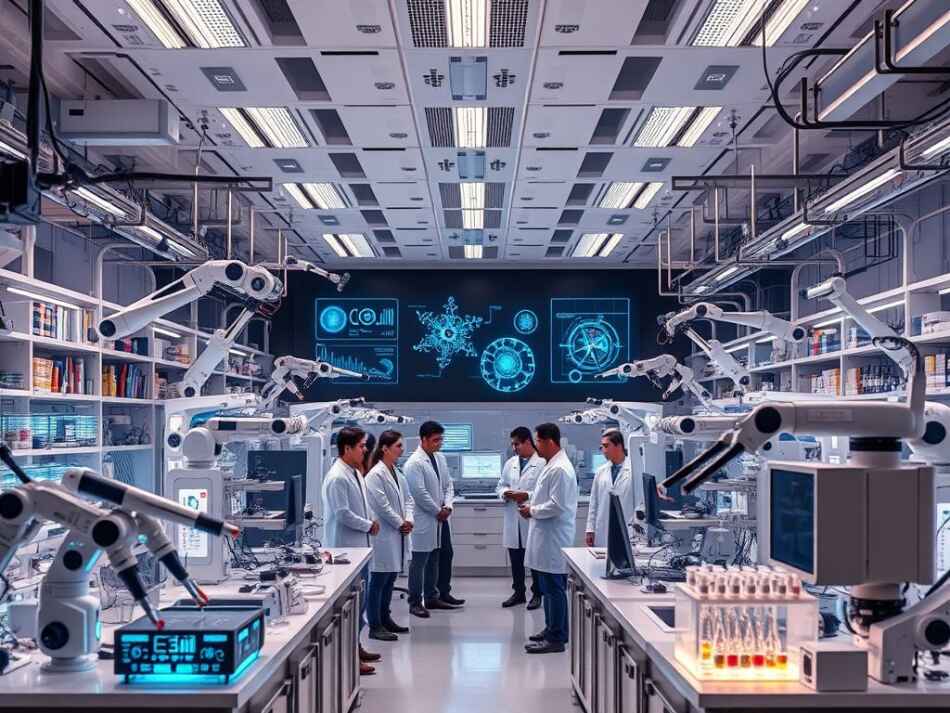
AI helps in finding the best gRNA sequences for CRISPR-Cas systems. It looks at the genome, the Cas protein, and the mutation type. This makes the gRNAs very efficient and specific.
Enhancing Research Through Artificial Intelligence
AI makes genome editing better and cheaper. It analyzes lots of genomic data. AI does:
- Predict off-target effects of CRISPR therapies
- Make better delivery systems for gene editing
- Find new targets for precision medicine
AI’s Role in Data Analysis
AI and CRISPR nanomedicine lead to personalized treatments. AI looks at genetic data. It predicts gene editing success and picks the best editing strategies.
Predictive Modeling and CRISPR Outcomes
AI-driven drug discovery is exciting in CRISPR nanomedicine. Machine learning finds drugs that work with CRISPR-Cas. This makes treatments more effective and safe.
Collaboration in CRISPR Nanomedicine
Collaboration is key in CRISPR nanomedicine. Experts from academia, industry, and government come together. This speeds up the making of new therapies.
Academic institutions are vital for CRISPR nanomedicine science. Research grants from government agencies fund this work. For example, the University of California, Berkeley, got support from the National Institutes of Health (Source).
Partnerships Between Academia and Industry
Academic research is the base for CRISPR nanomedicine. But, partnerships with industry are key to getting treatments to patients. Companies have the means to do big clinical trials and make treatments.
The Role of Government in Research Funding
Government agencies like the National Institutes of Health and the National Science Foundation are important. They fund research through grants. This is key for early research that might not get private funding.
International Collaborations for Global Health
CRISPR nanomedicine can tackle global health issues. It’s important to work together across borders. This way, we can make treatments that are affordable and reach everyone.
Word count: 300
Conclusion
CRISPR nanomedicine is changing the game for treating diseases. It combines gene editing with nanotechnology for better treatments. This means we can tackle genetic disorders and complex diseases that were thought to be untreatable.
Recap of Key Points
This article has covered a lot about CRISPR nanomedicine. We’ve seen how it can treat rare genetic conditions and change cancer treatment. This field is full of promise, making healthcare better for everyone.
CRISPR and nanotechnology work together for more precise treatments. This means better health outcomes and a better life for patients.
The Future of CRISPR Nanomedicine in Healthcare
The future of CRISPR nanomedicine looks bright. With more research and teamwork, we’ll see even more progress. Personalized treatments based on your genes could soon be a reality.
This could be a game-changer for healthcare. It offers hope for people with diseases that were once thought to be untreatable.
Final Thoughts on Innovation and Ethics
The benefits of CRISPR nanomedicine are huge, but we must think about ethics too. We need to make sure these technologies are developed responsibly. Discussions and rules about gene editing and nanomedicine are key.
As we move forward, we must balance innovation with ethics. We must always put patient safety first and make sure everyone has access to these new treatments.