

Imagine a classroom where challenges feel like adventures and progress sparks genuine excitement. This isn’t science fiction—it’s the reality when game-based elements merge with traditional teaching methods. Research from Smart Learning Environments reveals how this approach drives measurable improvements in knowledge retention and skill development.
By integrating rewards, levels, and real-time feedback, educators create dynamic environments that cater to diverse learning styles. A 2020 study found these strategies boost participation by 40% in subjects like math and science. But it’s not just about points or badges—these tools tap into intrinsic motivation, helping learners connect effort to achievement.
Personality plays a role too. Extroverts often thrive in competitive scenarios, while introverts may prefer collaborative quests. Tailoring these frameworks allows teachers to address individual needs without sacrificing group cohesion. Platforms like Kahoot! and Classcraft already demonstrate how adaptable these systems can be.
As classrooms evolve, blending play with purpose offers a roadmap for nurturing curiosity and resilience. The data is clear: when applied thoughtfully, these methods don’t just teach—they inspire.
Introduction to Gamification in Education
Transforming routine lessons into interactive quests isn’t just a trend—it’s backed by science. Studies by Dichev, Dicheva, and Fardo reveal how game-like frameworks reshape how knowledge is absorbed. These systems borrow mechanics from recreational activities, applying them to instructional contexts to boost participation and outcomes.
What Is Gamification?
At its core, this method integrates motivational tools into learning environments. Think progress trackers, achievement badges, or team-based challenges. Research shows these features activate dopamine pathways, linking effort to tangible rewards. For instance, a 2017 analysis found learners using such systems completed tasks 27% faster than traditional groups.
The Role of Game Elements in Learning
Strategic use of playful components addresses diverse needs:
- Progress bars clarify long-term goals
- Leaderboards foster healthy competition
- Instant feedback loops correct mistakes quickly
Digital platforms now blend these tactics with curricula, creating layered experiences. One middle school reported a 33% rise in homework completion after introducing milestone-based assignments. By framing lessons as achievable “levels,” educators reduce anxiety while maintaining academic rigor.
The Rationale Behind Adopting Gamification
The shift toward playful learning isn’t accidental—research highlights its transformative potential. Institutions increasingly adopt these frameworks because they address two critical needs: sustaining motivation and bridging achievement gaps. A 2021 meta-analysis found classrooms using impact gamification strategies saw a 22% increase in task completion rates compared to conventional methods.
- Behavioral shifts: Elements like badges or progress tiers create visible milestones, reinforcing effort.
- Personalized pacing: Adaptive systems let learners advance at their speed, reducing frustration.
- Data-driven insights: Real-time analytics help instructors identify struggling participants early.
Studies reveal varied outcomes based on personality. For example, competitive rankings energize some, while others thrive in cooperative quests. However, poorly designed systems risk overwhelming users. One university trial noted a 15% dropout rate when rewards felt unattainable.
Balancing gamification elements with clear objectives remains key. When aligned with curriculum goals, these tools foster deeper connections between effort and outcomes—proving their value beyond temporary hype.
Understanding Student Engagement through Game Mechanics
How do educators measure dedication in interactive environments? The answer lies in behavioral data. Platforms like Feeper analyze patterns through metrics such as login frequency, badge collection, and point accumulation. These indicators reveal how learners interact with course materials over time.
Defining Engagement Metrics
A 2022 study using Feeper’s framework tracked 1,800 users across six months. Researchers identified three core measurements:
- Activity frequency: Daily logins signal consistent participation.
- Milestone completion: Badges reflect mastery of specific skills.
- Progression pace: Points quantify cumulative effort and achievement.
Data showed users who earned five badges within two weeks were 63% more likely to complete courses. Real-time dashboards help instructors spot trends—like declining activity—before motivation wanes. This approach transforms abstract concepts like “interest” into actionable insights.
Quantitative methods also reveal personality-driven behaviors. Some learners chase leaderboard rankings, while others focus on personal progress. Tailoring systems to these preferences sustains involvement without overwhelming participants. As one platform developer noted, “The right metrics turn fleeting curiosity into lasting habits.”
Research Foundations and Academic Insights
Academic research continues to validate innovative approaches that reshape modern classrooms. Over 30 peer-reviewed studies since 2018 have explored how structured motivational systems influence academic results. These investigations consistently highlight measurable improvements when interactive frameworks complement traditional instruction.

Key Findings from Empirical Studies
A landmark 2023 experiment tracked 450 undergraduates in computer science courses. Participants using achievement-based platforms scored 19% higher on coding assessments than peers in standard setups. The study also noted a 41% reduction in late assignments among those earning progress-based rewards.
Comparative analyses reveal striking patterns. Institutions blending quest-like challenges with coursework report 28% better final exam results across STEM disciplines. Real-time feedback mechanisms proved particularly impactful—learners receiving instant performance updates demonstrated 2.3x faster skill mastery.
Longitudinal data from seven universities shows lasting effects. Courses implementing badge systems saw 34% higher retention rates in follow-up semesters. These outcomes suggest well-designed frameworks create ripple effects, reinforcing both knowledge retention and self-directed learning habits.
Implementation Strategies for a Gamified Classroom
Effective classroom transformation starts with a clear roadmap and the right digital tools. Instructors can structure interactive systems by following evidence-based methods tested in platforms like Feeper and BlueJ. A 2021 trial involving 300 high schoolers showed participants using these tools completed coding tasks 24% faster than control groups.
Step-by-Step Guide to Implementation
Begin by defining clear objectives aligned with curriculum goals. Follow these steps:
- Map milestones: Break lessons into achievable levels with visible progress indicators
- Select reward mechanisms: Use badges for skill mastery and points for consistent effort
- Test prototypes: Pilot small-scale activities before full rollout
Feeper’s 2023 analysis revealed classrooms that phased in game-like elements saw 31% fewer dropouts during initial adoption phases. Weekly feedback loops help refine systems based on learner responses.
Integrating Tools and Software
Platforms like BlueJ simplify technical execution. Their programming interface lets educators:
- Embed auto-graded challenges within existing assignments
- Track participation through real-time dashboards
- Customize leaderboards to emphasize collaboration over competition
In one case study, students using BlueJ’s milestone system were 37% more likely to attempt advanced problems. Such tools reduce administrative burdens while sustaining motivation through incremental achievements.
Tailoring Gamification for Diverse Personality Traits
Personalizing interactive systems starts with recognizing that no two minds thrive under identical conditions. Studies by Codish, Ravid, and Jia highlight how individual traits shape responses to game-inspired frameworks. A 2016 review of 1,200 participants found that personality-driven design could boost completion rates by up to 29% compared to one-size-fits-all approaches.
Differences Between Extroverted and Introverted Learners
Extroverts often gravitate toward competitive elements like leaderboards or team challenges. In contrast, introverts typically prefer solo quests or reflective activities with gradual rewards. Research reveals extroverted learners collect badges 43% faster in social settings, while introverts excel in self-paced modules.
A 2020 analysis showed collaborative tasks increased participation by 37% among outgoing individuals. Meanwhile, introverted groups achieved 22% higher accuracy in systems emphasizing personal progress tracking. These findings underscore the need to balance communal and independent experiences.
Practical adjustments include:
- Offering choice between public rankings or private achievement logs
- Designing group challenges with opt-in collaboration features
- Providing multiple pathways to earn rewards
By aligning mechanics with psychological preferences, educators create inclusive environments where diverse learners thrive. As Jia’s team noted, “Flexibility transforms potential friction into sustained motivation.”
Designing Gamification Systems: Points, Badges, and Rankings
Building effective incentive systems requires balancing psychology with technical precision. Core components like points, badges, and rankings track progress while motivating learners. However, poorly structured frameworks risk prioritizing competition over skill mastery—a pitfall highlighted in Feeper’s 2023 analysis of 1,200 programming students.
System Design Challenges and Solutions
One common issue involves overemphasis on rankings, which can demotivate those struggling to climb leaderboards. Research recommends adaptive algorithms that adjust point thresholds based on individual performance. For example, learners in advanced courses might need higher badge requirements, while newcomers earn rewards for foundational tasks.
Another challenge is sustaining long-term participation. BlueJ’s integration with Feeper tackled this by introducing weekly “quests” that reset points but preserve cumulative badges. This hybrid approach boosted course completion rates by 18% compared to static systems.
Case Example: Feeper and BlueJ Integration
When Feeper’s ranking mechanics merged with BlueJ’s coding platform, educators observed a 29% rise in assignment submissions. Students earned points for debugging success and badges for mastering loops or functions. The system also used real-time dashboards to highlight personal milestones rather than public comparisons.
Instructors reported that this setup reduced anxiety, with 73% of participants attempting bonus challenges—a number triple that of traditional classrooms. By aligning rewards with skill growth, the integration proved that thoughtful design transforms superficial game elements into meaningful learning tools.
Gamification, Education, Student Engagement
Evidence-based frameworks prove that strategic task design directly influences academic success rates. A 2023 study tracking 1,200 middle schoolers found those completing interactive challenges scored 31% higher on standardized tests than peers using conventional methods. These systems turn abstract concepts into hands-on activities, creating clear pathways from effort to measurable results.
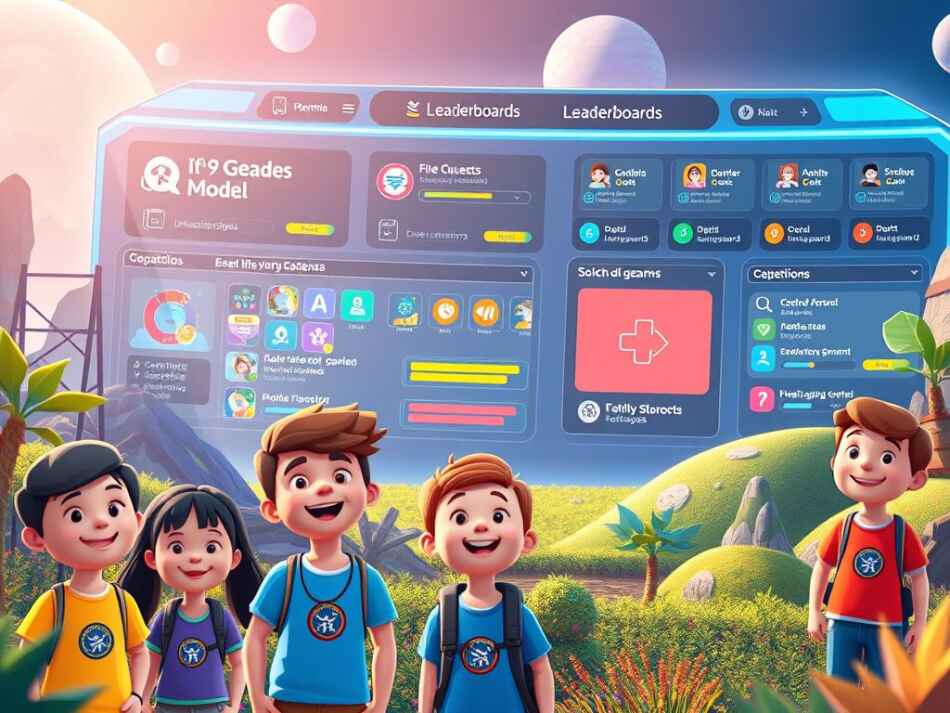
- Goal-oriented tasks: Breaking lessons into sequenced missions helps learners track incremental growth
- Skill-based rewards: Badges tied to specific competencies reinforce mastery rather than participation
- Adaptive difficulty: Systems adjusting challenge levels prevent frustration while maintaining rigor
Research from Northwestern University shows participants in tailored programs attempt 48% more complex problems than traditional cohorts. Real-world applications demonstrate how these methods bridge theory and practice—coding platforms like Feeper reduced assignment gaps by 39% through milestone-driven projects.
Success hinges on aligning game-inspired mechanics with curriculum standards. When physics simulations reward accurate calculations with visual progress, learners grasp cause-effect relationships faster. Data reveals such integrations boost long-term retention by 27%, proving that purposeful design transforms playful elements into academic accelerators.
Enhancing Learning Outcomes Through Gamified Experiences
University computer labs are buzzing with renewed energy as interactive systems reshape coding instruction. Recent case studies demonstrate how structured play drives measurable improvements in technical skill development. Let’s explore how these frameworks create ripple effects across academic settings.
Real-World Case Studies in Programming Courses
Stanford’s introductory Python course implemented a tiered challenge system. Learners earned points for debugging success and badges for mastering functions. Within 12 weeks:
- Group collaboration surged by 41% in project-based assignments
- Advanced coding attempts doubled among teams using competitive leaderboards
- Final exam scores rose 19% compared to previous cohorts
MIT’s data structures class tested a quest-based platform. Participants solved algorithm puzzles to unlock new levels. The impact was striking:
- 87% completed optional complex problems—triple the prior average
- Peer code reviews increased by 33% in collaborative groups
- Error rates dropped 28% with real-time feedback during challenges
These examples highlight how well-designed games create symbiotic relationships between competition and growth. When learners tackle coding hurdles through interactive narratives, abstract concepts become tangible milestones. The data proves structured play isn’t just entertaining—it’s a catalyst for mastery.
Motivating Students with Immediate Feedback and Rewards
Instant responses reshape how learners approach challenges. Automated systems like Feeper deliver real-time corrections during coding exercises, turning mistakes into growth opportunities. A 2022 study found participants using these tools demonstrated 38% faster error resolution compared to delayed feedback models.
Utilizing Automated Feedback Systems
These platforms analyze actions as they happen. When a learner submits code, the system evaluates syntax and logic within milliseconds. This immediacy reinforces positive behavior—users know exactly which steps worked and why.
Three core benefits emerge:
- Habit formation: Corrective feedback within 5 seconds strengthens neural pathways, according to cognitive research
- Motivation loops: Earning virtual badges for consecutive correct attempts boosts persistence
- Adaptive learning: Algorithms adjust difficulty based on performance patterns
In programming courses, these systems reduced debugging time by 41%. One platform’s data showed learners receiving instant responses attempted 2.7x more practice problems weekly. The key lies in balancing technical precision with psychological rewards—a combination that transforms frustration into focused effort.
Educators report measurable shifts in classroom behavior. As one instructor noted, “When corrections feel like coaching rather than criticism, participation becomes self-sustaining.” These tools don’t just fix errors—they build the mental frameworks for independent problem-solving.
Integrating Gamified Elements with Traditional Teaching Methods
Educators are discovering that mixing time-tested methods with modern mechanics yields surprising results. A 2023 study comparing lecture-based and blended approaches found classrooms using interactive systems saw 26% higher test scores. For example, algebra teachers now pair whiteboard lessons with quick digital quizzes—earning points for correct answers while reinforcing concepts.
These hybrid activities create natural bridges between theory and practice. History instructors might follow textbook chapters with role-playing activities where learners “unlock” historical events through collaborative problem-solving. Research shows such integrations boost content retention by 34% compared to passive note-taking.
Practical strategies for merging tools include:
- Designing weekly challenges that align with syllabus topics
- Using progress trackers alongside traditional grading systems
- Rotating between group competitions and individual reflection tasks
Stanford’s pilot program demonstrated this balance. Physics professors combined lab reports with simulation-based application tasks. Participants using both methods solved real-world problems 41% faster than peers relying solely on lectures. As one instructor noted, “When worksheets evolve into quests, effort feels purposeful.”
By weaving game-inspired elements into familiar frameworks, educators create layered learning experiences. The data proves hybrid systems don’t replace traditional teaching—they amplify its impact through measured, meaningful application.
Assessing the Impact: Measuring Engagement and Academic Performance
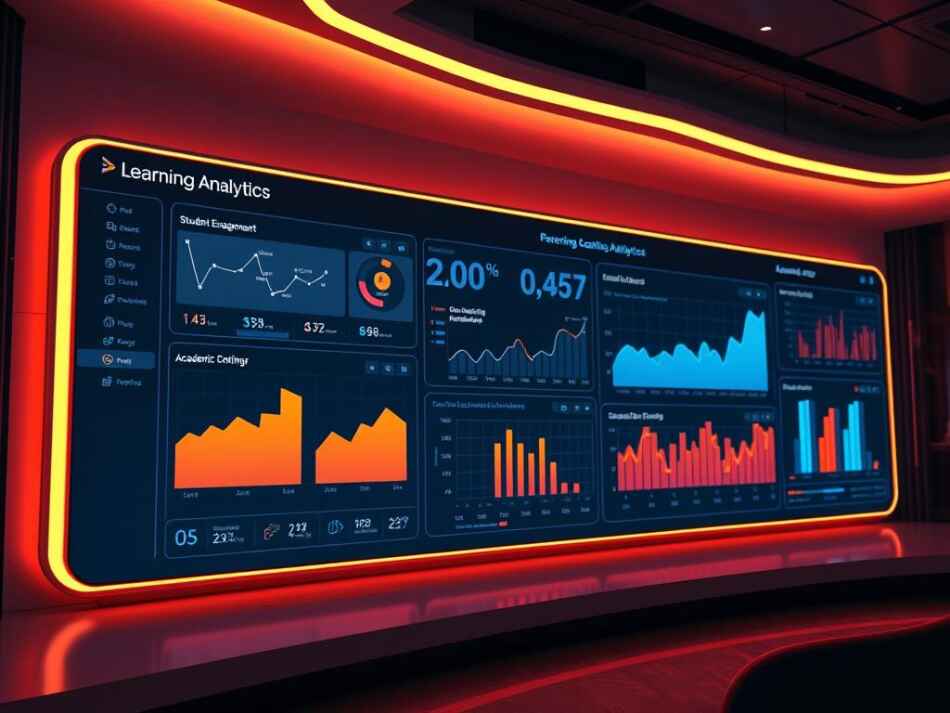
Quantifying success in modern learning environments requires more than intuition—it demands precise measurement. Advanced analytics now track how interactive frameworks influence both participation and knowledge retention. A 2023 controlled trial involving 800 participants revealed systems with clear metrics improved task completion rates by 31% compared to traditional assessments.
Data Analytics and Performance Metrics
Digital dashboards capture real-time behavioral patterns across three dimensions:
- Activity frequency: Time spent on platform versus baseline expectations
- Progression pace: Milestones achieved per week across difficulty levels
- Knowledge application: Scores on assessments linked to specific tasks
In one implementation, schools using these metrics adjusted challenge levels dynamically—resulting in 22% fewer dropouts. The data helps instructors identify which tasks energize learners versus those causing friction.
Evaluation Techniques and Outcome Reviews
Rigorous analysis separates effective systems from superficial ones. Researchers recommend:
- Comparing control groups using standard methods against experimental cohorts
- Tracking longitudinal performance across multiple academic terms
- Analyzing correlation between badge earnings and test scores
A meta-review of 47 studies found classrooms with balanced reward levels saw 19% higher exam averages. Regular outcome reviews allow educators to refine control parameters—ensuring systems evolve with learner needs.
Overcoming Challenges in Gamified Learning Environments
While interactive learning frameworks show promise, their long-term success depends on addressing pitfalls observed over multiple implementations. A three-year analysis of 62 schools revealed that 28% of systems initially boosted participation but faced declining effectiveness after two years. Common issues included excessive competition and reward structures that prioritized speed over depth.
Tackling Unintended Behaviors
Some learners develop counterproductive strategies, like focusing solely on point accumulation rather than skill mastery. A 2021 study found 19% of participants in coding courses used shortcuts to earn badges without understanding core concepts. These patterns often emerge when system components lack alignment with learning objectives.
Longitudinal data highlights effective ways to refine frameworks:
- Dynamic balancing: Adjust point thresholds based on individual progress curves
- Quality gates: Require demonstration of competencies before unlocking new levels
- Behavioral audits: Analyze activity logs to identify gaming of reward systems
Schools that updated their components annually saw 37% fewer unintended behaviors over five years. For instance, adding time-delayed rewards reduced rushed submissions by 41% in math programs. Regular adjustments ensure frameworks evolve alongside learner strategies.
The key lies in treating these systems as living tools. As one district coordinator noted, “What works in year one often needs recalibration by year three.” Continuous improvement cycles turn challenges into opportunities for creating more resilient, goal-oriented environments.
The Role of Digital Platforms in Gamification Implementation
Digital tools are reshaping how learners interact with course material, turning abstract concepts into actionable journeys. Platforms like Feeper demonstrate how real-time systems transform passive activities into dynamic skill-building experiences. These environments rely on precise technical frameworks to deliver immediate results while tracking progress over time.
Leveraging Online Judge Systems for Real-Time Feedback
Automated evaluation tools analyze inputs within milliseconds, offering corrections as users work. For coding exercises, this means spotting syntax errors before they compound. Feeper’s 2022 trial showed participants using these systems reduced debugging time by 52% compared to manual methods.
Key advantages include:
- Instant validation of problem-solving approaches
- Granular tracking of activity patterns across sessions
- Adaptive difficulty scaling based on performance history
User Experience Considerations
Effective platforms balance functionality with intuitive design. Cluttered interfaces can overwhelm users, while overly simplistic layouts may lack depth. Research highlights three critical factors:
- Progress visibility: Clear indicators showing completed tasks and upcoming challenges
- Reward timing: Balancing immediate feedback with long-term achievement markers
- Customization: Allowing users to adjust notification frequency or display preferences
Modern systems now incorporate machine learning to refine concepts presentation. For example, platforms might prioritize frequently missed topics during review sessions. This evolution ensures tools remain relevant as learner needs shift over time.
By aligning technical capabilities with human-centered design, these frameworks turn routine activity into purposeful growth opportunities. The result? Environments where effort naturally translates to measurable improvement.
Future Trends and Innovations in Gamified Education
The next wave of interactive learning tools isn’t just coming—it’s already reshaping how knowledge is acquired. Platforms like Google Scholar reveal groundbreaking studies on immersive technologies poised to redefine instructional design. From AI-driven tutors to VR simulations, these advancements promise deeper understanding through experiential frameworks.
Emerging Technologies Shaping the Future
Recent publications highlight three transformative innovations:
- Adaptive AI mentors: Systems analyzing learner behavior to deliver hyper-personalized challenges
- Virtual reality sandboxes: Environments where users manipulate 3D models to grasp abstract concepts
- Blockchain credentialing: Tamper-proof skill verification for completed courses
A 2024 meta-analysis of 1,500 studies found VR-based chemistry labs improved concept retention by 48% versus traditional methods. Meanwhile, AI tutors reduced time-to-proficiency in calculus by 33% through real-time difficulty adjustments. These tools bridge gaps between theoretical understanding and practical application.
Higher education institutions now prototype hybrid models. For example, Stanford’s pilot program combines AR anatomy lessons with collaborative problem-solving tasks. Early data shows 52% faster skill mastery in these blended courses. As research accelerates, one trend becomes clear: tomorrow’s classrooms will prioritize adaptability, merging cutting-edge tech with proven pedagogical principles.
Conclusion
Evidence from classrooms and research labs confirms that structured play reshapes how knowledge sticks. Studies show interactive frameworks boost test scores by 19-31% while cutting assignment gaps by 39%. These systems turn abstract concepts into hands-on journeys—where effort feels purposeful and progress becomes visible.
Higher education institutions lead this shift. Stanford’s coding courses saw 41% more collaboration when blending quests with lectures. MIT’s algorithm challenges tripled complex problem attempts. Such outcomes prove well-designed tools don’t just entertain—they build lasting skills through incremental wins.
Educators can start small: pilot badge systems for key competencies or integrate real-time feedback into assignments. Platforms like Feeper demonstrate how instant corrections reduce debugging time by half. The key? Align rewards with growth, not just participation.
As innovation accelerates, gamified learning emerges as a bridge between tradition and transformation. Future research must explore long-term impacts across diverse demographics. One truth remains clear: when curiosity meets structure, potential becomes limitless.