


Educational landscapes are changing fast with new technology. Shared virtual spaces are a big change in learning. They offer new ways to learn and grow skills.
Students get to see virtual reality coding in action. They don’t just read about it. They can touch and see it from different angles.
Immersive learning breaks down barriers. Students from all over can work together. This makes learning richer and prepares them for the future.
New tech mixes the real and digital worlds. It makes learning exciting and real. But will it change how we learn to code?
Introduction to the Metaverse and Its Impact on Education
Technology is changing fast, and the metaverse is a big step forward. It’s a digital world that changes how we learn. Schools around the world are looking into how it can make learning better.
The metaverse is more than just new tech. It changes how we think about learning. It brings new ways to engage in school, from elementary to college.
Definition of the Metaverse
The metaverse is a shared virtual space. It combines real and virtual worlds. Users can interact with each other and digital objects in real-time.
The metaverse uses tech like blockchain and cloud computing. These help create detailed 3D environments. Advanced graphics make these spaces look real, making learning more fun.
The metaverse is different from other digital spaces. It keeps going even when no one is there. It’s like a living, breathing world.
The metaverse opens up new ways to learn. Students can visit historical sites, do science experiments, and work on coding projects. It makes learning fun and interactive.
The metaverse is a big change in digital learning. It lets learners experience knowledge in new ways. This is the start of a new era in education.
The Role of Coding in the Metaverse
Coding is key in the metaverse, turning dreams into virtual reality. It’s not just for watching content. It’s where we create things live. Coding lets us dive into this new digital world.
The metaverse needs special coding for its immersive feel. It needs code for complex spaces, real-time actions, and lasting worlds. Developers build entire worlds, with their own rules and systems.
These virtual places need advanced coding to work. Every virtual place, like classrooms or art galleries, is built with code. This code makes everything work smoothly together.
Importance of Coding Skills
Knowing how to code in the metaverse lets users create. Students can:
- Make their own virtual places
- Build interactive learning spots
- Make apps for virtual problems
- Change platforms for school needs
- Work on big virtual projects
This change from watching to making is powerful in metaverse learning. Students who code can shape their learning spaces. They can make places that fit their learning needs.
New coding ways are coming for the metaverse. Old text-based coding is being joined by easier methods. Visual coding lets beginners make complex things easily.
Spatial coding is also new. It lets creators code in 3D space. This way, developers can make things directly in the virtual world.
Tools for coding together are also coming. Many can work on one project at the same time. This helps students learn to work together, like in real jobs.
These new coding ways are making learning easier. They also prepare students for new jobs. Skills from coding in the metaverse can lead to careers in:
- Virtual world design
- Digital experience making
- Metaverse building
- Virtual economy management
- Cross-reality app making
The metaverse can change education. It offers interactive learning that improves results. History students can explore ancient times in virtual places. Science students can do experiments in virtual labs.
Code makes these experiences possible. By learning to code, students get technical skills and understand digital systems. They learn to solve problems and build solutions, skills useful everywhere.
Asfuturistic codinggets better, making the metaverse is easier. What used to need many developers can now be done by one person. This lets more people help shape the metaverse, making it richer and more diverse.
Virtual Classrooms: A New Dimension of Learning
Virtual classrooms are changing how we learn to code. They offer interactive and spatial learning experiences. These digital spaces are more than just video calls or online classes.
They create immersive environments where students can engage with content in new ways. This is like science fiction coming to life.
Virtual reality is changing education. It removes physical limits, allowing for new learning experiences. Students can manipulate objects and see concepts in three dimensions.
For coding, meta classrooms offer unique chances. Students can walk through their code and see data flow. They can spot bugs and understand complex ideas better.
Advantages of Virtual Classrooms
Learning in meta classrooms has many benefits. These environments solve old problems in coding education.
- Global connectivity – Students from all over can work together, sharing ideas.
- Spatial visualization – Complex ideas become clear in three dimensions, helping different learners.
- Real-time collaboration – Students can work on projects together, getting feedback right away.
- Immediate feedback loops – Code execution shows the effects of decisions instantly.
- Customizable learning environments – Spaces can be tailored for different learning styles and needs.
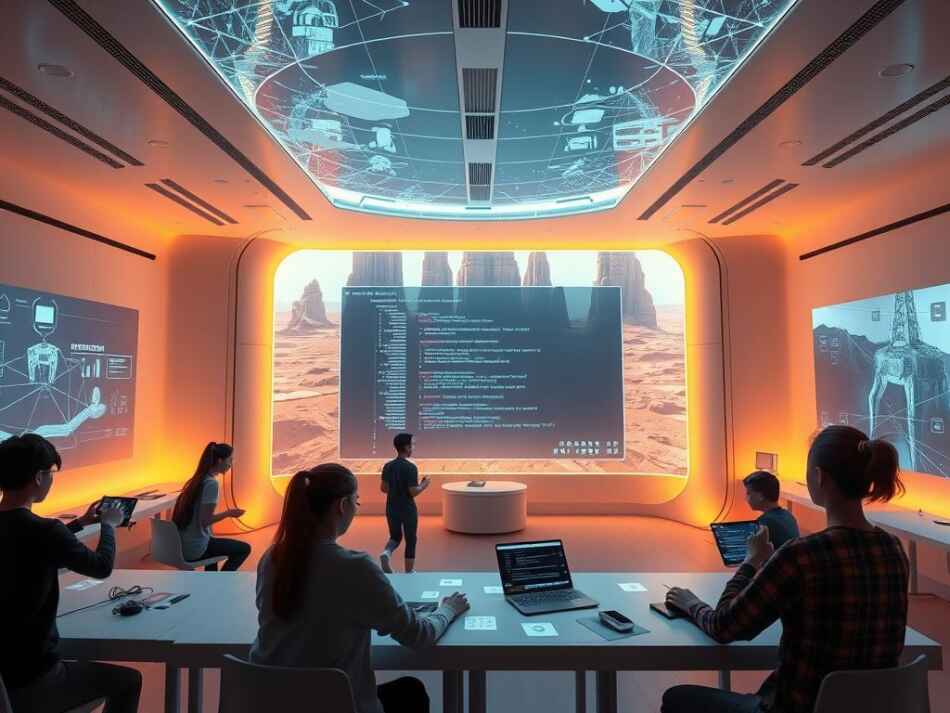
Meta classrooms let students “step inside” code to debug it. They can see how data moves and find errors easily. This makes learning more intuitive.
Virtual classrooms also offer great chances for teamwork. Students can work together, no matter where they are. They can point to things and communicate easily.
Accessibility is another big plus. These environments can be set up for different needs. For example, students with visual impairments can use spatial audio. This makes learning more inclusive.
Meta classrooms also make learning more enjoyable. They make coding a hands-on, social activity. This reduces frustration and makes students feel more connected.
As schools explore the metaverse, virtual classrooms will get even better. The line between learning and doing will keep getting smaller. This will make learning to code more intuitive.
Gamification: Enhancing Learning through Play
Gamification is changing how we learn to code in the metaverse. It makes learning fun and engaging. This method works well for today’s students who love digital stuff.
Gamification in the metaverse does more than just make learning fun. It helps students learn by solving challenges. This makes learning coding easier and more exciting.
The metaverse is perfect for gamified learning. It lets students dive into coding challenges in a virtual world. They can see their code work in 3D space.
Benefits of Gamified Learning
Using games in coding education has many benefits. These benefits are even better in the metaverse:
- Increased persistence – Games break down big challenges into smaller ones
- Reduced fear of failure– Games teach us to try again
- Enhanced problem-solving skills– Games make us think creatively
- Immediate feedback loops– We see right away if our code works
- Social motivation– Games make learning a team effort
Studies show gamified coding education works well. A study found students learned 27% more and remembered 35% more than usual. The metaverse makes these results even better.
Tools like Classcraft bring games into schools. In the metaverse, we have platforms like CodeCombat VR. They turn coding into quests in virtual worlds.
Gamification makes coding real. When students write code to make their avatar jump, they learn better. This is because they connect with the material in a new way.
The metaverse is great for learning because it lets us interact with concepts physically. Students can see how their code changes the virtual world. This helps them remember what they learned.
Games in the metaverse also teach us to keep trying. They show that mistakes are chances to learn. Students can see how their code works and try again.
Games in the metaverse are powerful because they use different ways to learn. They appeal to visual, kinesthetic, and logical learners. Everyone can find something they enjoy.
Coding Bootcamps and Courses in the Metaverse
Coding education meets virtual reality in new bootcamps for the metaverse. These programs change how we learn to code. They use immersive tech for experiences that old schools can’t offer.
Students can see their code come to life in 3D. They can interact with it in real-time. This is a big change from old ways of learning.
Old coding bootcamps used screens to teach. But metaverse-based coding education lets learners step into their code. They can change things with gestures and see the results right away.
These virtual classrooms don’t care where you are. Students from all over can work together. Teachers can show concepts in 3D, making them easier to understand.
Overview of Available Bootcamps
The world of virtual reality coding education is growing fast. Many platforms are leading the way. They offer everything from beginner courses to advanced metaverse development skills.
- CodeVR Academy – Teaches immersive JavaScript and WebXR development. Students build 3D web apps in a virtual classroom.
- MetaLearn – Focuses on Unity and C# programming for game development in virtual reality.
- BlockchainVR Institute – Teaches blockchain tech and metaverse development. Students learn to make apps that work in virtual worlds.
- Spatial Code Labs – Students work together to build metaverse environments from scratch.
These programs use special features of the metaverse. For example, students can organize code in 3D. This makes complex systems easier to understand.
Many bootcamps let students work together in real-time. Teachers can give feedback right away. This makes learning more interactive than remote classes.
Curriculum in these bootcamps is designed to build on itself. Students revisit core concepts with more complexity. This helps them see projects from new angles as they get better.
Assessments have changed too. Students are graded on projects that work in the virtual world. This makes sure they have practical skills, not just theory.
As these programs grow, they partner with tech companies. This creates a path from learning to working. Some bootcamps even have virtual job fairs where students can show their projects to employers.
The Social Learning Experience in the Metaverse
The metaverse is changing how we learn. It offers 3D spaces for students to learn together, no matter where they are. This new way of learning is exciting and promising.
Learning in the metaverse is more than just talking. Students can share virtual spaces, work on projects together, and code in real-time. This makes learning feel more real and connected than online classes alone.

One big plus of metaverse learning is learning with others from far away. Students from different places can share their views in these virtual worlds. This diversity leads to more creative solutions.
Collaborative Learning Opportunities
Collaborative coding in the metaverse is a game-changer. Studies show students in virtual groups solve problems 35% better than alone. This shows how teamwork boosts learning and skills.
There are many ways to learn together in the metaverse:
- Pair programming in virtual reality – Two students work together on code, one writes while the other checks in real-time
- Code review sessions in shared 3D spaces for feedback
- International hackathons for participants worldwide
- Virtual coding communities for project showcases and mentorship
These experiences mimic real-world coding. In jobs, coding is a team effort. Learning to code with others prepares students for this.
Metaverse learning also builds important soft skills. Students learn to communicate, work together, and collaborate across cultures. These skills are key for success today.
Virtual learning spaces also tackle a big problem in online education: feeling alone. Students feel connected, which boosts motivation and lowers dropout rates. This creates a safe space for learning and asking questions.
As the metaverse grows, so will chances for social learning. New tools for working together and sharing ideas are being made for education. The future of coding education looks bright, with more teamwork and connection.
Challenges in Teaching Coding within the Metaverse
Teaching coding in meta classrooms is tough. It has big technical problems that teachers face. The idea of learning in a new way is exciting but has real issues that make it hard.
One big problem is the digital divide. Not all students can use the internet fast enough or have the right devices. This makes some students miss out on learning in meta classrooms. It also makes learning gaps bigger.
There are more than just device issues. Students need:
- Fast computers with good graphics
- Strong internet
- VR headsets or special tools
- Up-to-date software and systems
Many schools can’t afford these things. Even schools with more money struggle to keep up with new tech.
Technical Barriers for Educators
Teachers also face big challenges. They need to learn how to use new tech, which takes a lot of time. This can make teaching harder.
Changing how we teach is hard too. Old ways of teaching coding don’t work well in new tech. Teachers must find new ways to teach that use the metaverse’s strengths.
Testing students in new ways is also hard. We need new ways to see if students are learning. This is because old tests don’t work well in virtual spaces.
Fixing tech problems in class is hard. Teachers must:
- Quickly find and fix problems
- Keep students focused
- Offer other ways to learn
- Report tech issues
- Keep the lesson going
Keeping students interested is another challenge. The metaverse is fun but can be distracting. Teachers need to find ways to keep students on track.
We need to work together to solve these problems. Schools, tech companies, and governments must help. We need money for tech and training. We need better internet for everyone. And tech companies should make things easier to use. Only then can meta classrooms really help with coding education.
The Future of Coding Education in the Metaverse
The world of coding education in the metaverse is growing fast. New tech is making learning exciting. The Metaverse in Education Market is set to grow from USD 3.9 billion in 2024 to USD 98 billion by 2034. This growth rate of 37.9% shows how big this field is going to be.
Big tech companies like Meta Platforms, Microsoft, and Google are investing a lot. They’re creating new ways to teach coding in the metaverse. This change will make learning more fun and interactive.
Metaverse programming techniques are changing education. Students can now code in 3D and work with others worldwide. This makes learning more engaging and interactive.
Emerging Technologies to Watch
New tech is set to change coding education. AI-powered coding assistants are very promising. They can help students improve their coding skills and learn at their own pace.
Advanced tools are making coding easier to understand. Students can now interact with coding concepts in 3D. This makes learning more hands-on and fun.
Haptic feedback systems are adding a new dimension to coding. They let students feel their code, making learning more real. Imagine feeling the structure of code or the weight of inefficient code.
Neural interface tech is also exciting. It might let programmers create code with their minds. This is a big step towards making coding more natural and intuitive.
Quantum computing is another area to watch. The metaverse is perfect for teaching quantum concepts. Students can explore and learn about quantum in a virtual lab.
Blockchain tech is also changing education. It makes learning more open and fair. Smart contracts and NFTs can verify and share learning achievements in new ways.
Universities and tech companies are pushing the limits of metaverse coding education. They’re finding new ways to make coding accessible to everyone. This includes people with disabilities or learning differences.
As these techs improve, coding education in the metaverse will get better. Students will learn in immersive, personalized environments. They’ll be guided by smart virtual mentors and work with others worldwide.
This change in coding education could solve the global talent shortage. It opens up new career paths in the digital world. The metaverse is not just changing how we teach coding. It’s changing what it means to be a programmer today.
Integration of AR and VR in Coding Education
AR and VR are changing how we learn to code. They turn code into interactive, visual experiences. This makes learning fun and engaging.
These technologies help make abstract ideas clear. They create interactive learning spaces. This is better than old teaching methods.
Benefits of Augmented Reality
AR is great for coding education. It adds to traditional teaching in unique ways. It shows how code works in real life.
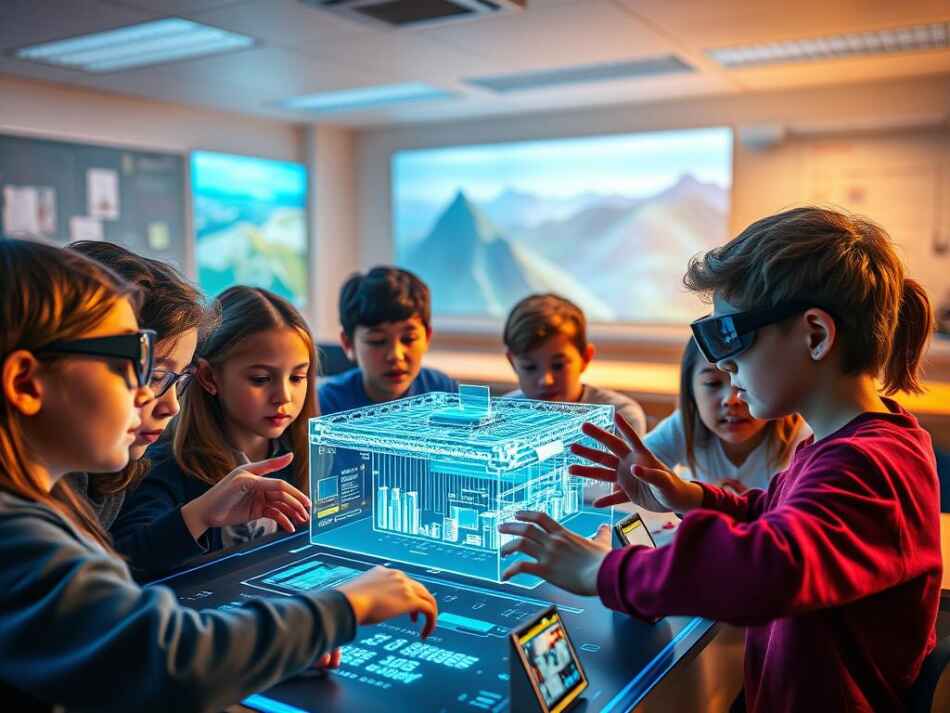
AR makes complex ideas easy to see. Students can see and touch code in 3D. This helps them understand better.
AR connects code to real devices. Students can see how code changes things. This makes learning more fun and effective.
It’s also good for different learning styles. Visual and kinesthetic learners do well with AR. They can interact with code in 3D.
Many AR tools are made for coding education:
- CodeSpatial: Students arrange code blocks in space
- AlgoVision: Shows algorithms as they run
- DataStructAR: Turns data structures into 3D models
- CircuitAR: Shows electrical flows on physical breadboards
Studies show AR is effective for coding. A 2022 study found AR students did 27% better. They were also 34% more engaged.
AR makes learning real-world. Students see their code in action. This helps them understand its value.
Teachers can show coding concepts in new ways. They can demonstrate algorithms live. This makes learning more interactive.
AR is getting easier to use. It’s available on phones and affordable headsets. This makes coding education more accessible.
Real-World Applications of Coding Skills
Coding skills meet metaverse tech, opening new job doors in many fields. Digital worlds get more complex, and so does the need for developers. They must know how to code and handle virtual spaces.
Coding skills are not just for tests anymore. Employers want people who can make coding work solve real problems. In the metaverse, virtual reality coding skills are in high demand, leading to better jobs and growth.
The tech world changes fast, so learning never stops. Those who know how to code and use metaverse tech lead the way. They connect old software skills with new digital experiences.
Career Paths Related to Coding
Coding and metaverse tech create new jobs. These jobs are exciting for those with the right skills. Some top jobs include:
- Metaverse Architects – They design virtual worlds. They make the basic structure and rules of digital places. They earn $90,000 to $150,000 a year.
- Experience Developers – They make apps and fun experiences in virtual spaces. They get $85,000 to $130,000 a year.
- Backend Engineers – They keep virtual worlds running. They earn $100,000 to $160,000 based on experience.
- Virtual Reality Coding Specialists – They make VR apps and experiences. They earn $95,000 to $140,000 a year.
- Metaverse Security Experts – They protect virtual assets and data. They get $110,000 to $170,000 a year.
Old jobs are changing to include metaverse tech. Programmers, game designers, and UX experts need to know virtual reality coding. These jobs are growing 25-30% in the next five years.
To get these jobs, you need to know C#, JavaScript, and Python. You also need to know Unity, Unreal Engine, and WebXR. Employers also look for soft skills like spatial thinking and teamwork.
Learning in the metaverse has big benefits. It lets students practice coding in a real way. They can:
- See coding in 3D
- Work on projects with others
- Get feedback on their code
- Show off their skills with virtual projects
For those looking to change careers or start new, metaverse coding education is key. It prepares you for real jobs. As work moves online, knowing how to create and use virtual spaces is key.
Teacher Training and Development for Metaverse Education
Meta classrooms need a new way to train teachers. Schools are moving to virtual spaces for coding lessons. Teachers must learn new skills that go beyond old methods.
Teaching in virtual worlds is a big change. Schools leading in metaverse learning know teachers are key. Without ready teachers, virtual learning fails to help students.
Necessary Skills for Educators
Teaching in meta classrooms needs special skills. Spatial teaching competency is key. Teachers must use 3D spaces to teach coding concepts.
Teachers need to know how to use virtual tools. They must:
- Navigate and customize virtual spaces
- Create and manipulate 3D objects
- Use classroom tools and interfaces
- Fix common tech problems
- Keep student data safe
Teachers also need new ways to check if students learn. Traditional tests don’t work in virtual classrooms. Instead, they use projects and coding challenges.
Teachers must learn to talk clearly in virtual classrooms. They need to share complex ideas without being in the same room. Virtual tools help, not hinder.
Some schools offer special training for metaverse teaching. These programs teach both tech skills and new teaching methods. Mentorship helps new teachers learn from experienced ones.
Groups of teachers help each other in virtual classrooms. They share tips, solve problems, and come up with new ideas. Their collective knowledge is often more than formal training.
Teaching in the metaverse requires a big change in mindset. Teachers need to:
- Be okay with trying new things and making mistakes
- Learn with students
- Keep up with new tech
- Think differently about teaching
- Keep learning and growing
Building a strong teaching team for meta classrooms takes time and money. One-time training is not enough. Teachers need ongoing support to keep improving.
As coding education goes online, teachers play a vital role. They guide students through tech and teach them about ethics and society. With good teacher training, meta classrooms can truly improve learning.
Conclusion: The Future of Coding and Learning
The way we learn is changing with coding education moving into 3D worlds. This change is more than just new tech—it’s a big shift in how we learn important skills for the future.
Summary of Key Insights
The metaverse is making coding education more accessible. Virtual classrooms let students from all over get quality lessons. 3D environments make complex coding ideas easier to understand.
Learning in these spaces is fun because of games and challenges. Students get instant feedback and rewards. This helps them stay excited about learning.
But, there are big challenges like tech issues and who can access it. Yet, things are getting better. As tech gets easier to use and teachers get more comfortable, coding in the metaverse will become common.
The future of learning coding is all about using immersive tech and learning that fits each person. Companies leading this way are showing great results. For students, the metaverse means a new way to learn coding and a new way to see learning itself.