
The way we teach programming has changed a lot in recent years. Intelligent technologies are changing how students learn and practice in both schools and online. This change is more than a new teaching method. It’s a big change in how we learn computer science.
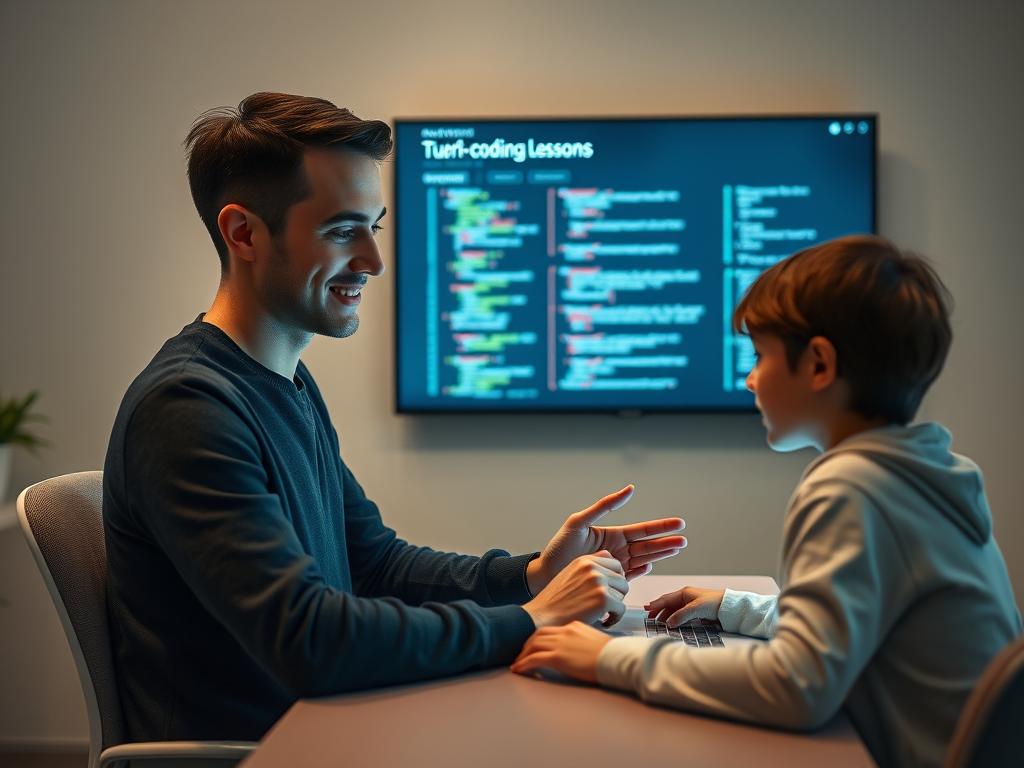
Places like Algocademy.com use smart algorithms for interactive tutorials that fit each student’s pace and style. These AI coding tutors give feedback right away, find where students need help, and suggest exercises. This was not possible just 10 years ago.
Personalized learning helps all students. Beginners get extra help on tough topics. Advanced students can move faster through what they already know. This makes learning computer skills more open to everyone.
Digital skills are key in today’s job market. These smart systems help close the gap in education. They’re not just changing how we learn. They’re also making sure more people can learn these important skills.
Introduction to AI in Coding Education
Artificial intelligence is changing coding education a lot. It moves from old classroom ways to new AI learning. This change helps students learn in ways that fit their own learning style and speed.
AI in coding education is more than just a new tool. It changes how we teach and learn. Intelligent platforms check how students do and change the lessons to fit each one. This is different from the old way of teaching everyone the same thing.
Schools from elementary to college are using AI to improve coding classes. AI helps make learning coding easier for everyone. This helps meet the need for more people to know how to code.
Overview of AI Technologies
There are many AI tools in coding education today. They work together to make learning better. Each tool helps in different ways, making a strong support system for students and teachers.
Some key AI tools in coding education are:
- Personalized Learning Algorithms – These systems look at how students do and make learning paths just for them
- Intelligent Code Analysis – Tools that check student code and help fix mistakes
- Interactive Problem-Solving Assistants – AI helpers that give hints when students get stuck
- Natural Language Processing – Technologies that explain coding in simple terms
- Predictive Analytics – Systems that guess how students will do and find problems early
These tools are much better than old educational software. They learn from students and get better over time. This makes learning more effective and tailored to each student.
AI is used in many ways in schools. Some use big platforms with many AI tools. Others use specific tools for certain things, like checking work or explaining ideas.
What’s special about these educational AI tools is they can teach like a human. They know when students need help and adjust the lessons. This was hard to do before with just one teacher.
Benefits of Using AI in Education
AI is changing how we learn to code. It gives each student a learning plan that fits their needs. This is a big change from old teaching ways.
AI can adjust to each student’s unique learning style. It finds out what each student knows and how they learn best. This makes learning to code easier for everyone.
Enhanced Learning Experiences
AI makes learning to code more fun and effective. Personalized learning lets students learn at their own speed. This can help them learn faster than before.
An AI coding tutor has many benefits over a human teacher. It can give feedback right away and adjust the learning level as needed. It’s always ready to help, day or night.
- Instant, personalized feedback on code
- Adaptive difficulty levels that adjust in real-time
- 24/7 availability for learning at any time
- Infinite patience for repeated explanations
- Multiple explanation styles for different learning preferences
AI makes learning fun and interactive. It uses tools like visualizations to help students understand complex ideas. For example, it can show data structures in a way that’s easy to see.
AI learning platforms also make learning fun. They use things like badges and competitions to make coding a fun challenge. This makes students want to keep learning.
Studies show that personalized learning with AI helps students remember what they learn. When students learn at their own pace, they understand better. This is very helpful for coding, where building on what you know is key.
AI makes coding more accessible to everyone. It helps students who might have been scared off by old teaching methods. This brings more diversity to the tech world and helps solve the problem of not enough programmers.
AI-Powered Coding Platforms
AI-powered coding platforms are changing how we learn to code. They use smart algorithms and easy-to-use interfaces. These tools adapt to how each student learns, giving them the right help.
These platforms use AI in many ways to help students. They check students’ coding to find mistakes and suggest better ways. They even guess where students might get stuck, helping them stay on track.
Tools and Software Available
The market for coding AI tools is growing fast. There are many options for both teachers and students. Algocademy is a great example of how AI is changing coding education.
Leading intelligent platforms have cool features. They design lessons based on how well you’re doing. They also adjust the difficulty of the content. You get help right when you need it, and you can practice with others.
Big names like Codecademy and Coursera are using AI too. Codecademy gives instant feedback on your code. Coursera changes your learning path based on how you do. Khan Academy suggests extra help when you get stuck.
New AI tools are even more advanced. They focus on specific areas like Python or data structures. Some just check your code, while others give detailed feedback and tips.
Teachers should think about a few things when choosing tools. Prices vary, from free to paid. How well the tool works with your school’s system is important. Some tools are for beginners, while others are for more advanced learners.
For schools on a tight budget, open-source tools are a good choice. They’re free but might need more setup. The wide range of coding AI tools means there’s something for everyone.
AI-Powered Coding Platforms
Today’s top online coding platforms use artificial intelligence. They make learning fit each student’s needs. These platforms check how well you learn, see what you’re good at, and what you need to work on. They change what you learn to keep you interested and help you remember more.
Big names like Duolingo, Udemy, and Coursera use AI to improve learning. They use smart algorithms to see how you’re doing and change what you learn right away. These educational AI tools know when you might lose interest. They make things easier or add new stuff to keep you hooked.
AI makes a big difference. Coursera says courses with AI help students finish at a rate of about 22%. That’s way better than the 4-6% who finish regular online courses. This shows how well AI helps keep students interested in learning.
Popular Online Coding Courses
Now, there are many AI-powered coding courses. They cover different programming languages and skill levels. These courses make learning paths that fit how you learn and how fast you go.
For newbies, Codecademy and DataCamp have Python and JavaScript courses. They adjust to how fast you learn. If you get stuck, AI helps with extra examples or simpler explanations. More experienced learners get harder challenges.
Intermediate and advanced learners find great courses on Pluralsight and LinkedIn Learning. These platforms use smart algorithms to suggest what to learn next. For example, if you’re good at basic machine learning, you might get to learn about neural networks next.
- Coursera’s “Python for Everybody” specialization uses AI to track mastery of key concepts
- Udacity’s “Front End Web Developer” nanodegree features AI-powered code reviews
- edX’s “CS50: Introduction to Computer Science” employs adaptive testing
- FreeCodeCamp uses AI to create personalized project recommendations
- DataCamp’s interactive coding environment provides AI-generated hints
These platforms don’t just look at how many finish. They also check if you can apply what you learned. They give you real-world projects to work on. AI checks your work, giving you feedback that’s like working with a real team.
Integrating AI into Classroom Teaching
AI in coding classes brings new ways to make learning fun and interactive. Teachers are using AI coding tutors to make computer science lessons more engaging. These tools help teachers by giving them data and making learning fit each student’s needs.
AI changes teaching from one way for everyone to learning that fits each student. Teachers use AI to see what each student is good at and what they need help with. This makes learning more fun and effective for everyone.
AI can predict how well students will do in the future. This helps teachers catch problems early and help students before they get stuck. It’s a big help in making sure students learn well.
Engaging Students Through Interactive Lessons
Good coding lessons need more than just tech. They need AI tools that fit well with teaching methods. When used right, AI coding tutors make learning fun and interactive in many ways.
- Gamified coding challenges that adapt in real-time to student performance
- Collaborative programming projects with AI-guided assistance
- Interactive visualizations that make abstract concepts concrete
- Personalized project pathways based on student interests
- Virtual coding environments with immediate feedback loops

Good teaching mixes teaching the whole class and using AI for practice. For example, a teacher might teach a new concept to everyone. Then, students practice with an AI coding tutor that helps them one-on-one. This way, everyone learns together but gets help when they need it.
Teachers using coding AI need to manage well. They should set rules for when and how students use AI tools. Many teachers use a model where students switch between different activities, like working with the teacher or using AI.
It’s also important to balance screen time with hands-on activities. Good teaching mixes digital and real-world learning. This keeps students interested and helps them learn better.
AI also makes coding classes more welcoming for everyone. It helps students of all abilities learn without feeling left out. For example:
- Advanced students can move on to harder material
- Students who struggle get extra help
- Visual learners get graphic explanations
- Students can learn at their own pace
AI helps teachers by taking care of routine tasks. This lets teachers focus on what they do best: supporting students and making learning exciting. Coding AI makes teaching better, not worse.
Integrating AI into Classroom Teaching
AI in classrooms does more than just keep students engaged. It also helps teachers with their work and improves learning. Educational AI tools are made for both students and teachers. They help teachers do their job better.
Teacher Support and Resources
Teachers face many challenges when teaching coding. They need to make lessons fun and give feedback fast. AI helps with these tasks.
For example, ChatGPT lets teachers make coding exercises and tests quickly. It even helps prepare for student questions by looking at the course.
Educational AI tools save teachers a lot of time. They used to spend hours grading and planning. Now, AI does these tasks for them.
- It checks student code and gives feedback
- Creates coding exercises for different skill levels
- Makes quiz questions on specific topics
- Helps plan lessons based on class performance
- Translates coding instructions for different languages
There are now online courses for coding teachers. Places like Coursera and edX offer training in AI. This helps teachers use AI tools well in their classes.
Intelligent platforms give teachers insights on how students are doing. They find out where students need help. This helps teachers help students better.
For example, if a student is stuck on a coding concept, intelligent platforms can figure out why. They might see that a student doesn’t get loops in Python. Then, the teacher can focus on that.
AI makes coding education better for all students. It helps students with disabilities or language barriers. Educational AI tools offer:
- Text-to-speech for visually impaired students
- Easy explanations for students with learning disabilities
- Translation of coding instructions for English learners
- Alternative ways for students with physical disabilities
Teachers share ideas and resources online. Places like GitHub Education and StackExchange for educators help. Teachers can work together and share what works.
AI is not meant to replace teachers. It helps with routine tasks so teachers can focus on teaching. The best classrooms use AI and human teaching together.
As AI tools get better, teachers get more help. This makes teaching better for everyone. It makes learning to code better for students and teaching more rewarding for teachers.
Assessing Student Progress with AI
AI-powered adaptive testing changes coding education. It offers personalized learning experiences. Traditional methods often don’t give timely feedback that fits each student’s path.
Artificial intelligence brings new assessment tools. These tools grow with the student’s progress.
Coding AI systems check code fast and accurately. They find errors and compare solutions quickly. This lets students learn from mistakes right away.
Adaptive Testing Methods
AI testing adjusts to each student’s level. It’s not the same for everyone. This keeps students engaged and accurately measures their skills.
Modern coding AI uses many testing methods:
- Knowledge tracing algorithms track student understanding
- Progressive challenge systems get harder as students get better
- Mastery-based advancement models make sure students know the basics
- Pattern recognition systems find common mistakes
- Behavioral analysis tools look at how students solve problems
These methods give teachers detailed insights. They see more than just right or wrong answers. Coding AI looks at problem-solving, coding style, and thinking skills.
Using these systems needs careful planning. Schools and online platforms must make sure they fit with learning standards. They also need to check if these tests are fair and reliable.
For example, a student having trouble with loops gets extra practice. Another student, who knows loops well, can try something harder. This helps students learn faster and feel more confident.
Teachers get to see how students are doing in different areas. This helps them make better plans for teaching. They can decide when to help, when to challenge, and who to pair for projects.
As personalized learning grows, AI testing is key. It makes learning not just about passing tests, but about growing as a programmer.
Assessing Student Progress with AI
Intelligent platforms with real-time feedback are changing coding education. They give students help right away as they code. This makes learning more dynamic and effective, turning mistakes into learning chances.
Assessing coding skills used to take a lot of time. Teachers found it hard to give feedback quickly. AI is now helping by making the assessment process faster and more personal.
Real-Time Feedback Mechanisms
An AI coding tutor acts like a virtual mentor. It watches over students as they code. It finds errors right away and suggests fixes before students get frustrated.
These systems do more than just find errors. They give detailed feedback on code quality and development. Students get insights that would usually need a teacher’s attention.
These platforms offer several types of feedback:
- Syntax error detection – Finds mistakes in code structure
- Logic error identification – Points out flaws in program reasoning
- Code quality suggestions – Suggests better solutions
- Performance optimization tips – Finds ways to make code run better
- Security vulnerability alerts – Warns about security risks
Algocademy’s AI assistant is a great example. It’s available all the time and helps students with coding. Students can ask for help, explanations, or code reviews.
What’s special about these intelligent platforms is how they explain things in simple terms. An AI coding tutor can explain complex concepts in a way students can understand. This helps students move from being confused to understanding programming.
Studies show that real-time feedback systems improve learning. Students using these tools do better and faster. They also get less frustrated, which helps them stay motivated.
Teachers need to adjust how much help they give. Too much can stop students from learning to think for themselves. The best AI coding tutors give hints and guidance, not the answers.
Feedback can change based on how well a student is doing. Beginners get more detailed help, while advanced students get hints that challenge them. This way, each student gets the right amount of support.
By giving feedback right away, intelligent platforms make learning faster. Students can try new things, learn from mistakes, and develop problem-solving skills. These skills are key for success in programming.
AI and Curriculum Development
Data-driven curriculum design powered by AI is changing coding education. It makes learning paths that fit both what’s needed in the industry and what students can do. Unlike old ways that take years to update, AI curricula change fast. This means students learn the latest and most wanted coding skills.
The use of educational AI tools in making curricula is a big step forward. These tools look at lots of data at once. They figure out which skills are most important in the real world.
Data-Driven Curriculum Design
AI systems for making curricula use many kinds of data. This includes:
- How students do and what they learn
- What jobs need and what employers want
- What’s happening in open-source projects and coding frameworks
- What new tech and coding ways are coming
- What employers say about skill gaps
Places like Algocademy see their curriculum as always changing. The AI keeps an eye on new things in the industry and how students do. It then suggests updates to keep things relevant. This way, students always learn skills that are valuable in the job market.
AI’s power goes beyond just updating what’s taught. It knows exactly when and what to change. This makes learning more efficient.
Personalized learning is another big plus of AI in curriculum design. Instead of everyone learning the same thing, AI makes paths that fit each student. This is based on:
- How fast or slow each student learns
- What career goals and interests they have
- What they already know and what they need to work on
- What they’ve learned before and what they’ve done professionally
Schools using AI for curriculum see better student engagement and success. For example, coding bootcamps with adaptive curricula have up to 30% more students getting jobs.
AI also helps with a big problem in coding education: keeping up with new tech. If a new programming language becomes popular or an old one goes out of date, AI curricula can change right away. This way, students don’t learn skills that are no longer needed.
AI and Curriculum Development
Coding AI is changing how schools teach students for the future. Old ways of teaching can’t keep up with new tech. Intelligent platforms use big data to find new skills and trends. This makes learning in coding stay current and useful for jobs.
Addressing Industry Demands
Automation and digital changes have made schools need to change fast. Coding AI looks at job needs in real time. It finds out what employers want in different areas and places.
Schools are working with tech companies to make better coding programs. They use AI to keep learning up with job needs. For example, universities with tech partners get data on new tech. This helps students learn skills that are useful when they graduate.
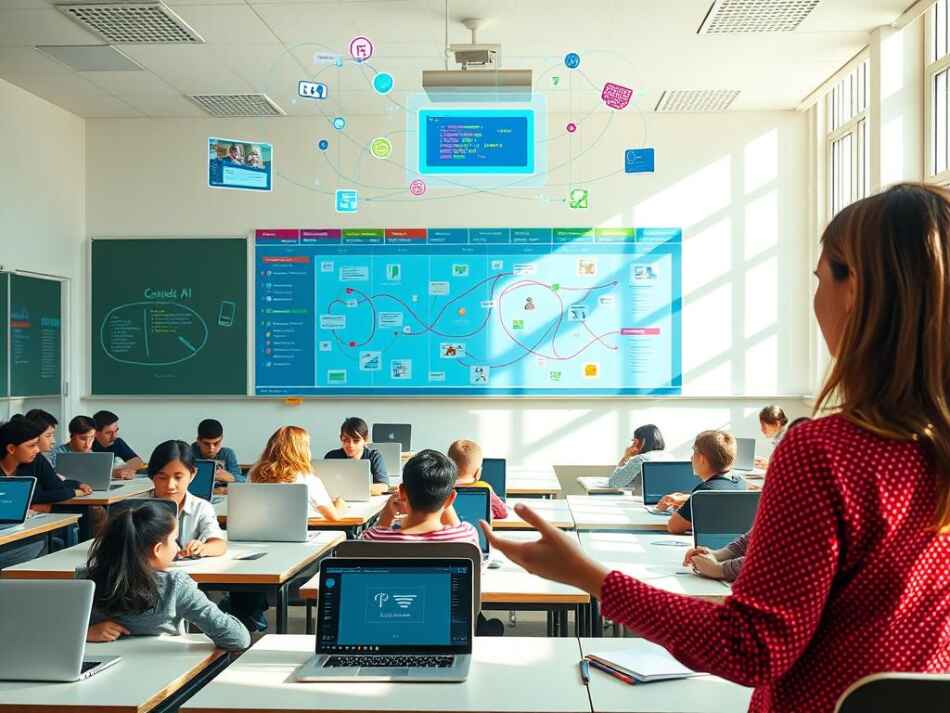
IBM Watson Talent is leading in using AI for work skills. It finds what skills are missing and suggests training. LinkedIn’s Learning Platform also uses AI to find courses that match industry trends.
These intelligent platforms help more than just students. They’re key for training workers for new tech jobs. As old jobs get automated, AI helps find new skills and training for workers.
Singapore shows how AI can help a whole country’s workforce. They use AI for lifelong learning, even for older workers. This keeps them competitive in the global job market.
AI in education makes it easier for students to find jobs. They see how what they learn matches job needs. This helps them choose the right path in tech.
Challenges in Implementing AI for Coding Education
AI can change coding education a lot, but schools face big challenges. They need to get past many obstacles to use AI in classrooms. Schools must work hard to add new tech to their coding classes.
Technical Barriers to Entry
One big problem is the digital infrastructure gap. Schools often don’t have the right computers, internet, or power for educational AI tools. This is key for AI to work well in schools.
About 260 million people worldwide don’t have internet. This digital gap means many students miss out on AI learning. It’s worst in rural and poor areas.
Setting up and keeping AI systems running is hard. Schools struggle with:
- Setting up AI coding tutors and integrating them with existing systems
- Troubleshooting technical issues that arise during implementation
- Training staff to effectively utilize AI-powered educational tools
- Managing data security and privacy concerns
- Adapting AI systems to specific curriculum needs
Getting AI tools to work with old tech is tough. Schools use many different systems. This makes it hard to add new AI tools.
It also costs a lot to start and keep using AI. Schools need money for setup, updates, and help. For poor schools, this is a big problem.
Handling data is another big challenge. AI needs good storage, security, and rules for student info. Schools must follow laws like FERPA and keep data safe.
To solve these problems, schools and governments need to work together. They can:
- Make partnerships to get more access to tech
- Help schools get devices and internet
- Make open-source AI tools that are easier to use
- Start using AI slowly to get used to it
- Train teachers well on using AI
By tackling these tech issues, schools can make AI coding education fair for everyone. The goal is to make sure all students can use these new tools, no matter where they are or how much money their family has.
Challenges in Implementing AI for Coding Education
Technology in education is moving fast. AI tools can change how we teach coding. But, there are big challenges and ethical issues to solve before we can use them fully.
Ethical Considerations in AI Usage
Using AI in coding education raises big ethical questions. These systems collect a lot of student data for personalized learning. Privacy, consent, and data security are key concerns.
Data privacy is a big worry. AI coding platforms collect lots of student data. This includes:
- Individual coding patterns and habits
- Learning progress and roadblocks
- Time spent on specific problems
- Error patterns and correction attempts
- Collaboration and communication styles
This data helps personalize learning but raises big data protection issues. The European General Data Protection Regulation (GDPR) sets important rules for handling data. These rules apply to all educational tech providers, even if they’re outside Europe.
Algorithmic bias is another big issue. AI systems might unintentionally keep old inequalities alive if they favor certain learning styles or backgrounds. Developers and teachers must work to avoid these biases and ensure fair learning for all.
It’s important to know how AI makes decisions about student progress. When AI suggests a learning path or gives feedback, teachers and students should understand why. Without this, learning can feel mysterious and take away student control.
Autonomy is also key in coding education. AI can help students but too much reliance can hurt their ability to solve problems on their own. Teachers need to find the right balance between helping and letting students learn by themselves.
Groups are creating ethical guidelines for educational AI. These guidelines cover:
- Informed consent from students and parents
- Clear data usage policies with opt-out options
- Regular algorithmic audits for bias detection
- Transparent decision-making processes
- Prioritizing student wellbeing over optimization metrics
Schools using coding AI need to create detailed ethical policies. These policies should cover data collection, usage, and protection. This builds trust with students and parents and helps make the most of these tools.
Using AI in coding education is not just about following rules. It’s about responsible innovation that respects students’ rights and improves learning. As AI evolves, keeping ethics at the center is essential for everyone involved in educational tech.
Success Stories of AI in Coding Education
AI tools are changing how coding is taught in schools across America. Schools are seeing big improvements in student engagement and interest in computer science. These stories offer insights for schools thinking about using AI.
Case Studies from Schools
Elementary schools are leading the way with AI in coding. At Westlake Elementary in California, a personalized learning platform boosted third-grade students’ coding skills by 40%. The curriculum adjusts to each student’s pace.
The AI helps when students get stuck, giving them the help they need. Teachers now focus more on creative problem-solving with students.
Middle schools have also seen great results. The SimSnap project in Midwest middle schools uses tablets for life science simulations. Students learn coding while exploring complex scientific topics.
SimSnap makes learning fun and interactive. Students work together on coding projects. At Parkview Middle School, this led to:
- 35% more student collaboration
- 28% better science test scores
- 42% more interest in computer science
- Double the participation from underrepresented groups
High schools use advanced educational AI tools to prepare students for college. Eastside High School in Atlanta uses AI to analyze and improve student code. This has made computer science more diverse.
Before, only 12% of coding students were female. Now, it’s 38%. The AI system adapts to different learning styles.
Educational video games are another success story. Schools use AI to make Minecraft-based STEM learning environments. These environments adapt to students’ interests and teach coding.
At Lincoln High School, students who struggled with traditional coding did well in the game-based environment. The AI adjusts challenges to keep students engaged.
Urban Prep Academy, serving low-income students, saw a 45% increase in AP Computer Science enrollment. Students showed a 92% interest in technology careers. Attendance and grades improved.
These success stories share a common thread: careful planning. Schools that did well integrated AI into their curricula, trained teachers, and set clear goals.
Many schools faced initial resistance from teachers. But by showing AI as a teaching aid, not a replacement, they won them over. Teachers learned how to use AI to improve their teaching.
Technical challenges were also common. Schools started with pilot programs to work out issues before going full-scale.
These stories show AI can greatly improve coding education. Success depends on proper training, careful integration, and using AI to enhance teaching, not replace it.
Success Stories of AI in Coding Education
AI has changed coding education in big ways. Teachers share how intelligent platforms have improved their teaching. They also talk about how students are doing better. These stories help other teachers think about using AI in their classrooms.
Testimonials from Educators
Luis Serrano, an online teacher at Cohere, talks about AI: “Using an AI coding tutor changed my teaching. It lets me focus on creative teaching. The AI takes care of the boring stuff.”
Sarah Johnson, a high school teacher in Boston, agrees: “My students love the AI coding tutor. It helps them learn at their own pace. We’ve seen a big jump in their projects.”
University teachers also see the benefits. Dr. Marcus Chen from Stanford says: “Our intelligent platforms help us see patterns in student coding. We can fix mistakes fast. It’s changed how we teach.”
Coding bootcamp teachers are big fans of AI. Elena Patel from CodeFuture Bootcamp says: “Our AI coding tutor is a game-changer. It helps students learn day and night.”
Corporate trainers use AI too. James Wilson from TechCorp says: “Our intelligent platforms adjust to each employee’s skill level. It saves time and boosts learning.”
AI helps teachers help students who are struggling. Dr. Alicia Ramirez from Midwest University says: “AI warns us about students who might fall behind. We can help them before it’s too late.”
But there are challenges. Robert Taylor, a middle school teacher, says: “Starting with AI was hard. But seeing students happy with feedback makes it all worth it.”
AI has changed teaching. It lets teachers focus on what really matters. As one teacher said: “AI does the basics. I get to inspire and guide.”
The Future of AI in Coding Education
AI is changing coding education fast. It’s making learning more personal and fun. These changes could change how we learn to code a lot.
Soon, learning and doing will mix more. This will help teachers and students a lot. But, we need to be careful to use these tools well.
Emerging Trends to Watch
AI for coding education is getting better fast. These new ideas are exciting for teachers and schools. They show what AI can do in teaching programming.
- Generative AI for Project Creation – AI might soon create project ideas for students. These projects will match what students like and can do.
- Immersive Virtual Environments – AI will make coding in virtual reality real. Students can see and work with code in 3D.
- AI Coding Companions – AI will help students code by suggesting ideas and fixing mistakes. It will explain things as students work.
- Natural Language Coding Interfaces – AI will let students code with words. It will then turn their words into code.
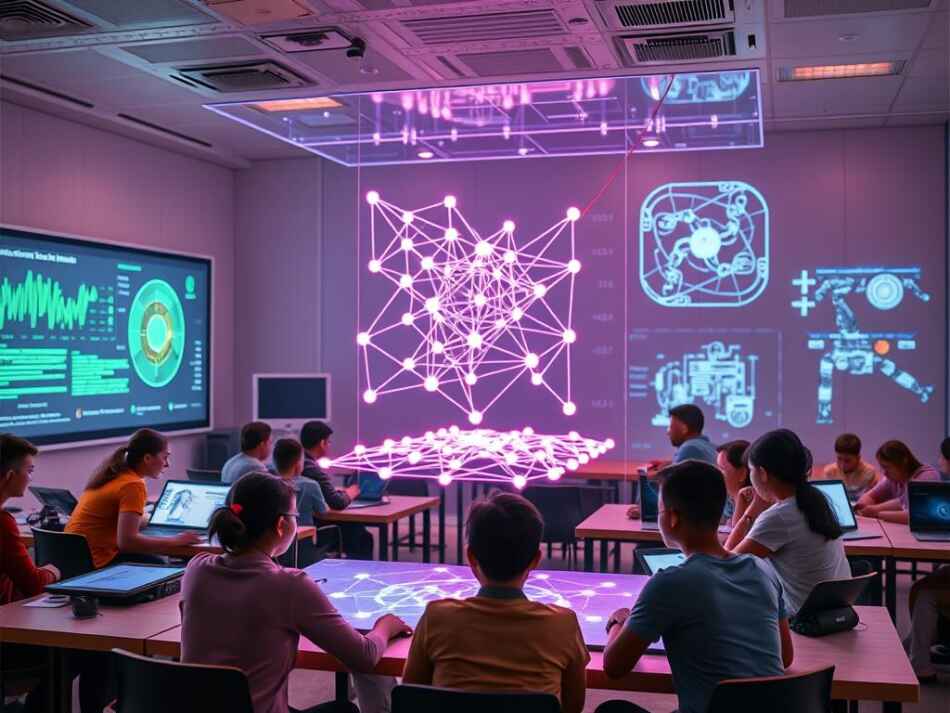
AI is also making learning fit different ways people learn. It uses pictures, sounds, and hands-on activities. This helps students learn better.
AI is making coding real with robots and virtual reality. Students can see their code work in the real world. This makes learning fun and clear.
In special areas like data science and cybersecurity, AI is making learning easier. It helps students understand complex ideas. It also makes learning these subjects more fun.
AI is also changing how we test students. Instead of just tests, we use real projects. This way, students learn more and get better feedback.
These changes won’t happen right away. But, schools that start now will be ready. Students will have a better, more fun way to learn programming.
The Future of AI in Coding Education
Artificial intelligence is changing the tech world. It’s changing how we prepare for jobs through coding education. NVIDIA CEO Jensen Huang says programming might not be as important soon. This is because AI is making everyone a programmer.
This change doesn’t mean coding education is going away. It means we need to update how we teach. Schools are changing to keep up with new tech. Many skills are now automated or helped by AI.
Long-Term Impact on Job Readiness
AI tools are changing how we learn for jobs. Roles are moving to management, overseeing AI. Students now learn to direct and improve AI work, not just code.
Personalized learning is key now. AI helps tailor education to each student. This creates paths that focus on the right skills for the future.
Future programmers will focus on understanding concepts, not just code. Skills like problem-solving and working with AI are more important. These skills help professionals keep up with tech changes.
Schools are using AI for simulations and virtual internships. These help students learn in real-world settings. They work on projects with AI tools to learn by doing.
Computational thinking is becoming more valuable than knowing one programming language. Humans will focus on creative problem-solving. This requires a new way of testing students’ skills.
Teachers now teach students to work with AI, not just code. They learn about AI’s limits and how to use it well. This prepares them for jobs that might not exist yet.
AI’s impact goes beyond tech skills to ethics. Students learn about AI’s impact, like bias and transparency. This prepares them for leadership roles in a tech world.
Balancing AI Use with Traditional Teaching
Teachers are seeing big changes in their roles with AI in coding education. AI and smart tutoring systems are taking on more tasks. This lets teachers focus on what they do best.
AI coding tutors work alongside teachers in the classroom. They handle some tasks, while teachers focus on the important stuff. This mix of tech and human touch makes learning better.
The Role of Teachers in an AI-Driven Classroom
Teachers now act as guides in AI-driven classrooms. They help students learn in new ways. Teachers focus on:
- Providing personalized mentorship and motivation
- Guiding ethical discussions about technology use
- Fostering creative problem-solving approaches
- Developing students’ collaborative skills
- Contextualizing coding within real-world applications
AI helps with basic tasks like checking code and explaining concepts. This lets teachers work on deeper learning. They help students think creatively and solve problems.
“AI does the basics, while teachers teach the ‘why’ and ‘how’,” says a new teaching approach. AI gives feedback on code, and teachers help students understand their choices.
Good teaching with AI uses a mix of tech and human touch. This might include AI-led practice and teacher-led discussions. The goal is to use tech to help, not replace, teaching.
Teachers need new skills to work with AI. Important skills include:
- AI literacy and understanding of algorithmic systems
- Prompt engineering to effectively direct AI tools
- Critical evaluation of AI-generated content
- Ability to customize AI learning experiences
- Expertise in facilitating human-AI collaboration
Teachers are learning to work with AI through training. They learn to use AI as a tool, not a rival. This makes teaching better.
AI helps, but students need to learn on their own too. Teachers make sure students have time to solve problems without AI. This builds self-reliance and thinking skills.
Teachers bring things AI can’t, like empathy and creativity. They inspire students to think about the impact of their code. As one teacher said, “AI teaches syntax, but humans inspire the next generation.”
Balancing AI Use with Traditional Teaching
Keeping students interested is a big challenge. Teachers must mix AI tools with old-school teaching methods. Intelligent platforms make learning more personal. But, they can’t replace the social and emotional parts of learning in class.
Schools should see tech as a tool, not a replacement for good teaching. The best coding programs use AI in a way that keeps human touch. This way, students learn both tech skills and how to work with others.
Maintaining Student Engagement
Using educational AI tools in coding classes comes with challenges. Too much screen time can make students less focused. Breaking lessons into smaller parts with different activities helps.
Young students need to interact with others. Online learning is great for reaching more students, but it shouldn’t ignore the value of working together. Good coding programs include group work and peer feedback, even with AI.
It’s also important not to rely too much on AI. Students need to learn to think for themselves. Teachers should guide when and how to use AI tools.
Using games to make learning fun can really help. Points and challenges can motivate students. But, teachers must make sure these elements help students learn deeply.
- Implement timed coding challenges that balance AI assistance with independent work
- Organize hackathons and community-based projects to complement individualized learning
- Create opportunities for students to showcase their work to peers and receive feedback
- Establish clear boundaries for when AI help is appropriate versus when students should struggle productively
- Incorporate unplugged activities that teach coding concepts without screens
Finding the right mix needs constant checking and adjusting. Teachers should listen to what students think about intelligent platforms. This way, tech can really help learning, not hurt it.
The best coding classes use AI well but keep the human touch. When students get help from educational AI tools and also interact with teachers, they learn a lot. They get good at coding and also at working with others.
By mixing tech with traditional teaching, teachers can keep students engaged. This prepares them for a world where both tech skills and being able to work with others are key. The goal is to use both AI and traditional teaching together, not to pick one over the other.
Resources for Educators and Students
Educators can use coding AI and personalized learning thanks to many resources. These tools change how we teach, and teachers need special training. Luckily, there are many ways for them to learn.
Professional Development Opportunities
Many schools and tech companies offer special training for coding teachers. Universities and tech firms have programs and workshops on using AI in classrooms. These programs teach both the tech and how to teach it.
Some schools work with tech companies for training. Teachers get hands-on practice with coding AI tools and learn to make lessons for their students. This helps teachers use what they learn right away.
Online courses let teachers learn about AI at their own pace. You can find courses from basic AI to using coding tools. Sites like Coursera, edX, and LinkedIn Learning have lots of courses on AI in education. There are also sites just for teaching coding with AI tools.
Teachers also learn from each other in online and in-person groups. These groups share ideas and solve problems together. They focus on specific tools or methods, helping teachers learn from each other.
Social media is also a big help for learning. Twitter chats, Facebook groups, and forums connect teachers worldwide. They share ideas and resources quickly, helping teachers grow professionally.
Mentorship programs pair new teachers with experienced ones. These mentors offer advice and help solve problems. They know how to use AI in the classroom.
Finding money for training can be hard. But there are ways to get help:
- District funds for tech integration
- Grants from foundations for AI
- Corporate sponsorships
- Grants from the government for STEM
- Scholarships from professional groups
Many tech companies offer free or cheap training for teachers. They know that well-trained teachers are key to using their tools well. Teachers get ongoing support to help them use coding AI in class.
Conferences on educational technology are great for learning. Events like ISTE and FETC have tracks on AI and coding. Teachers can learn from experts and meet others with similar challenges.
By using these resources, teachers can learn to use AI in their classes. This helps make learning more personal and effective for students.
Resources for Educators and Students
Online learning communities have grown a lot. They help with AI-enhanced coding education. Here, educators and students can find support and share knowledge. Educational AI tools make these places better, adapting to each person’s needs.
Online Learning Communities
These communities are like virtual classrooms. They help people at all levels learn together. Intelligent platforms make learning personal while keeping it real.
Big coding education sites have great community features. Places like Stack Overflow and Codecademy have forums and chat systems. AI helps find the right discussions and resources for you.
There are communities for every programming need. Whether you’re learning Python or web development, there’s a group for you. These groups use educational AI tools to help you learn more.
For those learning on their own, these communities are key. They offer support, motivation, and help when you’re stuck. AI helps track your progress and suggests what to do next.
- Forums with AI-enhanced content recommendation systems
- Collaborative coding environments with real-time feedback
- Peer review mechanisms supported by intelligent assessment tools
- Mentorship matching based on learning styles and goals
- Project showcases with community voting and feedback
When choosing a community, think about more than just size. Look for ones with intelligent platforms that help keep discussions good. The best communities mix AI with real people.
Remember, AI is helpful but not perfect. Always check facts with trusted sources. The best part of these communities is the real people sharing their knowledge.
By joining these communities, educators and students get more than just AI. They get a chance to learn with others. This mix of AI and people makes coding education better.
Conclusion: The Next Steps for AI in Coding Education
The path to using AI in coding education is clear. We need a plan for teachers to use these new tools. AI is changing how we teach and learn coding in schools. It’s making learning more effective, even better than old ways.
Using coding AI in schools is a big change. Teachers who get used to this change will help students succeed. The big question is how to use AI well in schools.
Recommendations for Educators
Teachers wanting to use AI in coding should follow this plan:
- Start with assessment: Check how you teach now. See where an AI coding tutor can help.
- Select appropriate tools: Pick AI tools that fit your teaching goals. Not all tools are the same.
- Begin with small implementations: Start with one unit or project. Then, use AI more.
- Collect meaningful data: Track how AI helps students learn and grow.
- Maintain the human element: Be a guide, not just a tool.
When teaching coding AI, be open. Tell students how it works and its limits. This builds trust and helps them use AI wisely.
Support AI by showing its benefits. Share how it helps students learn and grow. This can get more support for using AI in schools.
Don’t make these mistakes:
- Don’t use too many AI tools at once.
- Make sure teachers know how to use AI before teaching.
- Set clear rules for using AI in schoolwork.
- Think about students who might not have access to AI.
- Don’t let AI replace talking to teachers.
Check how well AI works by comparing before and after results. Use both numbers and stories to see how AI helps.
AI works best when you keep trying and changing. What works for one group might not work for another. Be ready to adjust your plan based on feedback.
By using AI wisely, teachers can make coding education better. The future of learning will be shaped by AI. Teachers who learn now will lead this change.
Conclusion: The Next Steps for AI in Coding Education
AI is changing how we learn to code. It’s making classrooms and online learning places very different. This change is big and exciting.
Future Directions for Research and Development
Research on AI in coding education is just starting. We need to know more about how AI helps students learn to code. We also want to see how different students react to AI teaching.
AI tools need to get better in a few areas. They should understand programming better and check if students can think computationally. Adding AI to learning about physical computing and robotics is also a great idea.
New learning algorithms will lead to more innovation. These systems will learn about each student’s learning style. They will find out what students don’t know and suggest the best learning paths.
Working together will help AI in coding education grow faster. Computer scientists, educators, and researchers need to team up. This way, new tech will match what’s best for teaching and learning.
As AI changes coding education, we must think about ethics too. It’s important to find the right balance between AI help and learning on your own. This way, we’ll make sure students can handle the challenges of the future.