
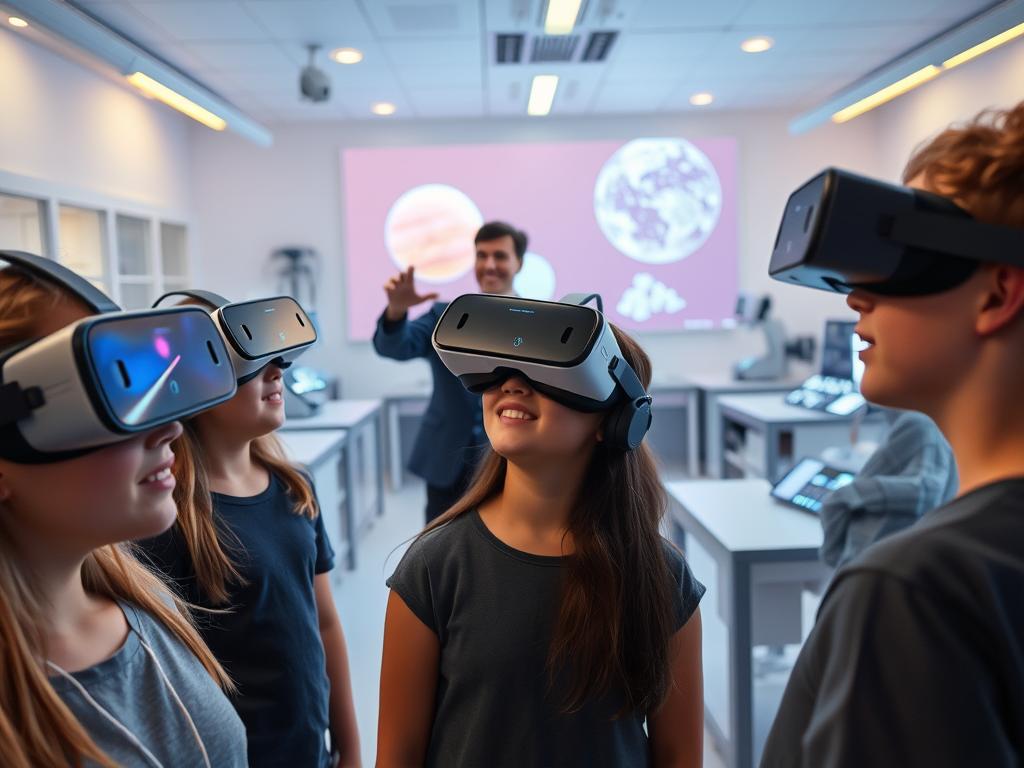
Imagine stepping into a world where students dissect digital frogs, walk through ancient ecosystems, or engineer solutions to climate crises—all without leaving their desks. This isn’t science fiction. Immersive technologies are reshaping how learners engage with complex subjects, blending hands-on exploration with traditional teaching methods.
Educators across the U.S. are adopting these tools to bridge gaps between theory and practice. For example, interactive simulations let learners manipulate 3D models of molecules or observe planetary motion up close. Such experiences spark curiosity while reinforcing abstract concepts through tangible experimentation.
Digital field trips and lab simulations also address logistical challenges. Schools no longer need expensive equipment or travel budgets to provide impactful learning opportunities. Instead, students gain access to lifelike scenarios that mirror real-world challenges—from engineering prototypes to diagnosing virtual patients.
By prioritizing engagement and accessibility, these innovations empower teachers to cultivate critical thinking skills. They also prepare younger generations for tomorrow’s workforce, where adaptability and technical fluency will be essential. The next sections explore how these advancements are unlocking new possibilities in classrooms nationwide.
Introduction to VR in STEM Education
What began as clunky headsets for gamers has evolved into precision instruments for exploring quantum physics and cellular biology. Early adopters saw these systems as entertainment devices, but forward-thinking instructors recognized their potential to make abstract ideas feel concrete.
The Evolution of Virtual Learning
Three-dimensional environments first gained popularity through military training and flight simulators. By the 2010s, consumer-grade hardware brought immersive experiences into homes. Schools soon adapted this technology, replacing textbook diagrams with interactive models students could manipulate.
Bridging the Gap Between Theory and Practice
Traditional lectures often struggle to demonstrate how equations apply to real-world scenarios. Digital labs let learners mix chemicals safely or test engineering designs in simulated environments. One Texas school reported 42% higher retention rates when using 3D anatomy models compared to static images.
These tools don’t just replicate physical experiences—they enhance them. A student can pause a chemical reaction to observe molecular interactions or rewind historical climate patterns. This flexibility helps build deeper understanding while accommodating different learning speeds.
Immersive Experiences and Real-World Simulations
Picture a classroom where learners walk through ancient ruins or conduct experiments in zero gravity—no permission slips required. These scenarios are now possible through interactive platforms that transform abstract ideas into memorable adventures. By blending exploration with practical application, educators create dynamic pathways for mastering challenging subjects.
Exploring Virtual Field Trips and Historical Events
Geographical and financial barriers vanish when classes visit coral reefs or witness pivotal moments in history. For instance, NASA’s Mars rover tours let participants collect soil samples while discussing planetary geology. Historical reenactments place learners in the shoes of inventors, activists, or engineers, fostering empathy and contextual understanding.
Key benefits include:
- Cost-effective access to global landmarks
- Multi-sensory engagement with historical timelines
- Opportunities to revisit locations for deeper analysis
Simulated Labs and Critical Skill Development
Controlled digital environments allow trial-and-error experimentation without safety risks. A chemistry class might test volatile reactions repeatedly, observing outcomes through adjustable variables. This approach builds analytical thinking as pupils refine hypotheses based on instant feedback.
Essential competencies developed through these methods:
- Problem-solving via iterative design challenges
- Team coordination during collaborative engineering tasks
- Data interpretation using real-time analytics dashboards
Such experiences mirror professional workflows, preparing young minds for future careers where adaptability and precision matter most.
Visualization of Complex Scientific Concepts
Understanding intricate ideas becomes effortless when learners can see them come alive. Advanced tools transform abstract theories into dynamic, manipulable models. Students no longer struggle to picture microscopic processes or vast astronomical systems—they interact with them directly.
Interactive Data Exploration in STEM
Take molecular structures, for example. Instead of memorizing flat diagrams, classes can rotate 3D renderings of compounds, observing bonds forming and breaking. One study showed pupils using these methods improved test scores by 34% compared to traditional lectures.
Data-heavy fields like genetics benefit similarly. Learners analyze DNA sequences through immersive dashboards, spotting patterns in gene mutations. Astronomy students chart star movements across millennia, adjusting variables to predict cosmic events. These activities build analytical skills crucial for data-driven careers.
Educators highlight how tangible experiences boost retention. Walking through a beating heart’s chambers or witnessing cellular respiration in action makes concepts unforgettable. This approach also prepares youth for emerging roles where interpreting complex systems is essential.
By merging creativity with technical rigor, these methods turn daunting subjects into engaging puzzles. They foster curiosity while equipping learners with tools to solve tomorrow’s challenges.
Enhancing Student Engagement Through Immersive Learning
Active participation replaces rote memorization in modern classrooms. Interactive environments capture attention by letting learners manipulate 3D models or solve puzzles in simulated scenarios. This hands-on approach sparks curiosity, turning abstract lessons into memorable journeys.
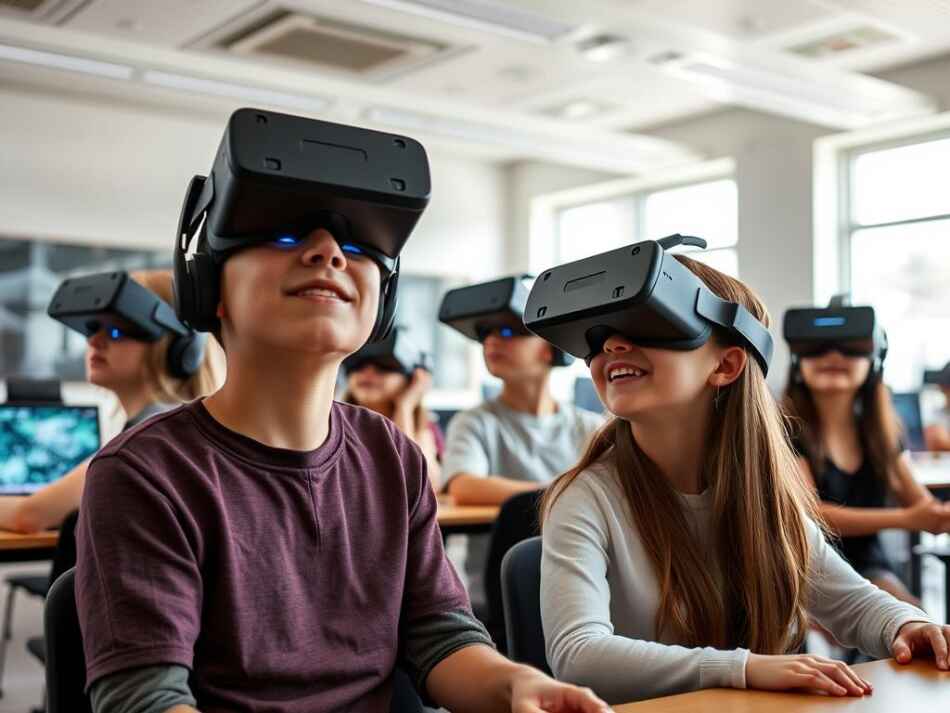
For example, chemistry apps allow students to mix substances digitally, observing reactions in real time. Engineering simulations challenge them to troubleshoot bridge designs under changing conditions. These activities mirror real-world problem-solving, making complex concepts feel approachable.
Educators report higher focus levels during these tasks compared to traditional lectures. One study found 68% of participants asked more questions after using interactive tools. The ability to repeat experiments or adjust variables builds confidence, encouraging deeper exploration.
Motivation also rises when lessons become collaborative adventures. Pupils work together to navigate ecosystems or decode mathematical patterns, fostering teamwork alongside critical thinking. This shift from passive absorption to dynamic participation prepares learners for careers demanding adaptability and creativity.
Interactive Learning Environments Powered by VR
How do students master complex systems without physical tools? Digital platforms now let learners experiment freely, testing ideas through trial and error. These spaces merge creativity with technical precision, turning abstract theories into tactile experiences.
Dynamic Simulation Platforms
Tools like PhET and Tuva demonstrate the power of repeatable simulations. Pupils adjust variables in real time—like wind speed on a bridge design—and instantly see outcomes. This iterative process builds problem-solving skills while reinforcing core principles through hands-on practice.
Key features of these platforms include:
- Customizable scenarios for testing hypotheses
- Instant feedback loops to refine approaches
- 3D modeling tools for visualizing data patterns
For example, engineering students prototype structures in risk-free settings. They tweak materials or load capacities, observing how choices impact stability. Such learn-by-doing methods deepen understanding faster than textbook diagrams ever could.
These applications also encourage creative experimentation. A chemistry class might explore reaction chains at molecular levels, adjusting temperatures or catalysts. Mistakes become learning opportunities rather than setbacks, fostering resilience alongside technical mastery.
By blending play with purpose, these environments prepare learners for real-world challenges. They cultivate analytical thinking through scenarios that mirror professional workflows—all while keeping curiosity at the forefront.
Collaborative Learning and Global Connections
How can a student in Texas team up with peers in Tokyo to tackle environmental issues? Digital collaboration tools are erasing borders, creating shared spaces where learners solve problems collectively. These platforms let classrooms worldwide design experiments, analyze data, and exchange perspectives in real time—turning cultural diversity into a strategic asset.
Facilitating Cross-Cultural Collaboration
Educators use interactive environments to connect classes across continents. For instance, a biology project might involve students in Brazil and Canada studying rainforest biodiversity through joint simulations. Such initiatives build communication skills as learners negotiate ideas and adapt to different working styles.
Common challenges—like time zone differences or hardware costs—are addressed through resource-sharing partnerships. Schools pool budgets for shared licenses or rotate access to high-end equipment. Open-source platforms also let teachers customize projects without expensive software.
Key benefits include:
- Exposure to international research methods
- Practice in multilingual teamwork
- Creative problem-solving through blended cultural insights
These efforts highlight the potential of unified learning communities. When educators collaborate, they create scalable solutions that make advanced tools accessible to all. Students gain not just technical expertise but also the cultural fluency needed in today’s interconnected workforce.
Personalizing STEM Education with Adaptive VR Tools
Customizable platforms are reshaping how students interact with challenging material. By adjusting to individual strengths and needs, these systems create tailored pathways for mastering subjects like coding or physics.
Designing for Every Learner
Modern platforms incorporate features that address diverse needs. Text-to-speech functions assist those with reading difficulties, while adjustable interface colors help learners with visual sensitivities. Real-time feedback loops let students progress at their preferred pace without pressure.
Key innovations driving inclusivity:
- Voice-controlled navigation for hands-free interaction
- Dynamic difficulty scaling based on performance patterns
- Multi-language support breaking language barriers
For example, a student struggling with geometry might receive 3D shape manipulation tools. Another learner could access simplified chemical reaction simulations. These adaptations ensure all participants gain meaningful insights from each lesson.
Assistive technologies extend beyond basic accommodations. Some environments automatically generate closed captions during live experiments. Others offer tactile feedback through specialized controllers, creating richer experiences for users with different learning preferences.
By prioritizing flexibility, these tools democratize access to advanced concepts. They empower educators to meet students where they are—transforming classrooms into spaces where every mind can thrive.
Virtual Reality, STEM Education, Science Technology Integration
Educators are blending time-tested approaches with interactive platforms to deepen understanding in scientific disciplines. These hybrid classrooms combine textbook diagrams with explorable 3D models, allowing pupils to manipulate concepts like protein folding or architectural blueprints. Hands-on experimentation becomes accessible even in schools lacking advanced lab equipment.
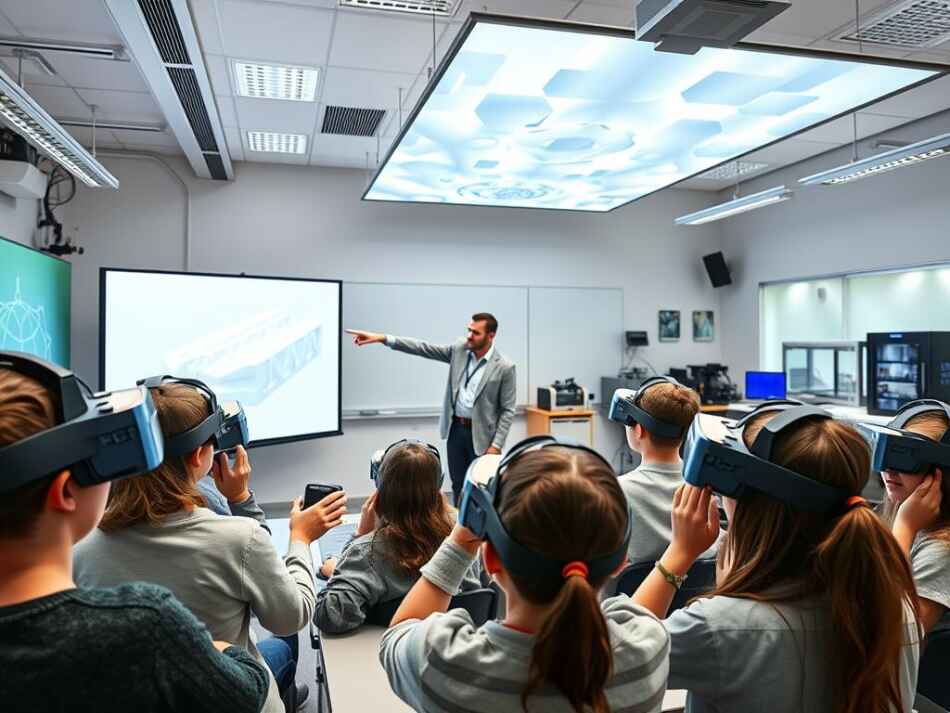
Case studies reveal transformative results. A Boston high school reported 55% faster concept mastery when using digital chemistry labs alongside traditional lectures. Learners rotate virtual molecules while discussing bond types, creating multisensory connections between theory and application. Architectural students prototype eco-friendly buildings in simulated environments before sketching physical models.
Teachers highlight increased enthusiasm in these blended settings. “Students ask more nuanced questions after interacting with dynamic systems,” notes a physics instructor from California. Meanwhile, pupils appreciate how complex ideas become tangible—one described circuitry simulations as “finally seeing how electrons actually move.”
Key benefits driving adoption:
- Reinforcement of abstract principles through manipulable visualizations
- Safe spaces for testing hypotheses across engineering and biology fields
- Scalable solutions for schools with limited resources
This synergy between classic pedagogy and modern tools cultivates adaptable thinkers. By grounding digital experiences in real-world problems, classrooms prepare learners for careers where innovation thrives at the intersection of tradition and progress.
Leveraging VR for Hands-On STEM Simulations
Classrooms are transforming into innovation hubs where learners tackle real-world challenges through interactive digital tools. Institutions like University College London showcase how immersive labs bridge gaps between theory and practice, offering safe, scalable resources for exploration.
Real-World Applications in Chemistry and Engineering
Chemistry students now mix volatile compounds in risk-free settings. For example, one simulation lets pupils alter reaction temperatures instantly, observing molecular changes without safety gear. Engineering classes prototype bridges under simulated earthquakes, refining designs based on real-time stress data.
These tools democratize access to advanced experiments. Schools lacking lab equipment can replicate high-cost procedures digitally. A recent case study showed 72% of participants retained complex concepts longer after virtual practice compared to textbook reviews.
Key advantages include:
- Cost-effective resources for underfunded institutions
- Repeatable trials for mastering technical skills
- Exposure to professional-grade scenarios early in training
By mirroring authentic workflows, these platforms prepare learners for careers demanding precision and adaptability. They turn abstract principles into tactile experiences—proving that the best way to learn is by doing.
Navigating Challenges and Considerations in VR Adoption
While interactive digital tools offer transformative potential, schools often face practical hurdles during implementation. High upfront expenses and technical demands can stall progress, even as educators recognize the value of hands-on methods.
Managing Costs and Technical Limitations
Setting up immersive labs requires significant investment. Headsets, software licenses, and network upgrades strain budgets—especially for smaller districts. One school reported spending $35,000 annually just on maintenance.
Creative solutions are emerging. Leasing equipment or partnering with tech companies reduces initial costs. Some institutions share resources through regional hubs, allowing multiple schools to access high-end tools.
Teacher training remains critical. Without proper guidance, even advanced systems gather dust. Workshops on software navigation and lesson integration help instructors maximize these platforms. Ongoing IT support ensures smooth operation during hands-on sessions.
Despite challenges, the long-term payoff justifies the effort. Studies show students using immersive labs develop deeper understanding of complex processes. For example, manipulating 3D engineering prototypes helps learners grasp structural physics faster than diagrams alone.
Balancing practicality with innovation remains key. Schools that plan strategically—combining phased rollouts with staff development—create sustainable pathways for impactful digital learning.
Empowering Underrepresented Students Through VR
Access to advanced learning tools shouldn’t depend on zip codes or family income. Emerging platforms are creating equitable opportunities for students in rural and low-resource areas. These virtual environments let learners conduct experiments and explore concepts once limited to well-funded schools.
Programs like C-STEM demonstrate this shift. They provide supplemental resources—from 3D lab simulations to coding challenges—paired with teacher training workshops. One initiative in New Mexico helped 78% of participating students improve their physics test scores within six months.
Breaking Down Barriers in Access
Collaboration fuels progress. Schools, tech firms, and policymakers work together to distribute affordable headsets and curriculum kits. Nonprofits often bridge gaps by refurbishing older devices for underserved communities.
These efforts create global connections. A student in Detroit might work together with peers in Nairobi to design sustainable energy solutions. Shared virtual environments remove language barriers through real-time translation features, fostering inclusive problem-solving.
Key outcomes include:
- Increased participation in advanced courses
- Enhanced confidence through risk-free experimentation
- Career exposure via simulated professional scenarios
By prioritizing accessibility, these technologies help every learner discover their potential. They prove that when tools evolve, opportunity follows.
Preparing Educators for VR Integration in the Classroom
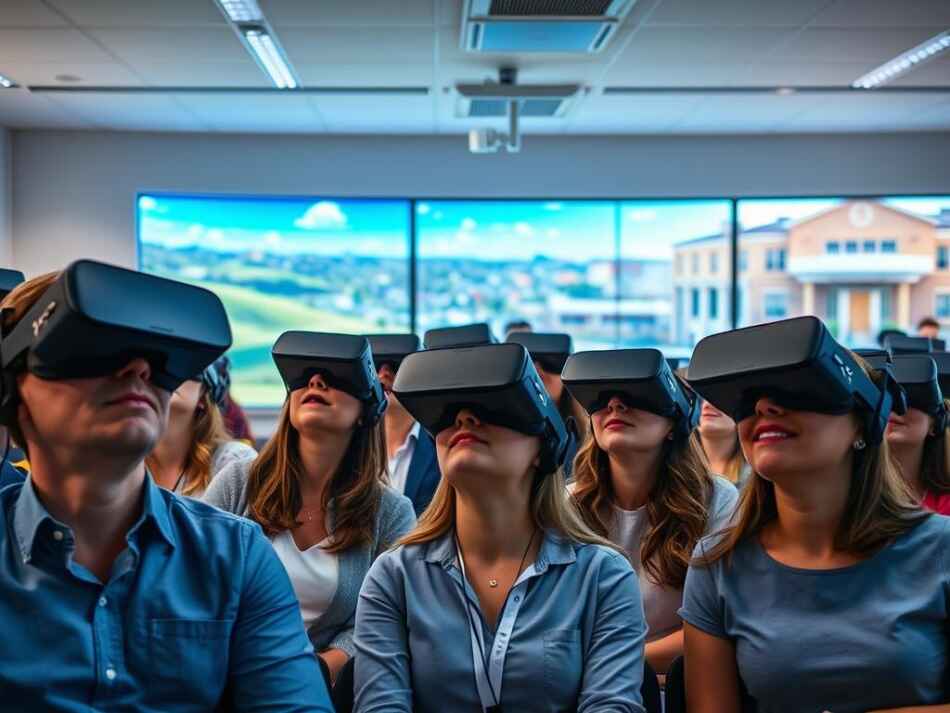
Teachers hold the key to unlocking interactive learning’s full potential. To bridge the gap between cutting-edge tools and daily instruction, schools must prioritize comprehensive training programs. Without proper guidance, even advanced systems risk becoming underused gadgets collecting dust in storage closets.
Building Confidence Through Hands-On Practice
Effective professional development goes beyond basic tutorials. Educators need opportunities to experiment with 3D modeling software and simulation platforms. For example, Oregon’s TechTeach Initiative pairs engineering professionals with instructors to co-create lesson plans using interactive tools.
Successful programs share three core elements:
- Ongoing workshops addressing real classroom challenges
- Peer mentoring networks for sharing troubleshooting strategies
- 24/7 technical support during initial implementation phases
These resources help teachers transition from hesitant newcomers to confident facilitators. A Chicago pilot program saw 89% of participants regularly using digital labs after six months of coaching. Their students demonstrated 40% higher engagement rates in physics activities compared to control groups.
Sustained investment in educator growth creates ripple effects. When instructors master dynamic teaching methods, they spark deeper curiosity in subjects like robotics and environmental systems. This shift transforms classrooms into spaces where theoretical knowledge meets practical innovation.
Evaluating the Impact of VR on Learning Outcomes
Data-driven insights reveal how interactive tools reshape knowledge retention. A 2024 study tracked 1,200 participants using immersive labs, showing 41% faster skill mastery compared to conventional methods. Educators attribute these gains to multisensory engagement, where learners experience concepts rather than passively absorb them.
Assessment strategies now blend traditional tests with real-time analytics. For example, physics instructors track how often pupils adjust variables in simulations—a metric linked to improved problem-solving abilities. Schools in Ohio reported 28% higher exam scores after introducing 3D modeling exercises in biology courses.
Key benefits observed across diverse groups:
- Higher retention rates for hands-on learners through repeatable experiments
- Improved confidence in tackling abstract topics like quantum mechanics
- Enhanced collaboration skills during group-based digital challenges
Educators refine their teaching approaches using performance dashboards. These tools highlight patterns—like which simulation stages cause confusion—allowing tailored interventions. One district saw a 33% reduction in achievement gaps after adopting adaptive feedback systems.
By aligning immersive experiences with measurable goals, schools create pathways where every student can thrive. The data doesn’t just validate the method—it guides its evolution.
Future Trends and Emerging Technologies in VR
Next-generation tools are reshaping how learners interact with advanced concepts, blending tactile feedback with adaptive digital interfaces. Industry leaders predict a surge in hyper-realistic simulations that respond to voice commands and physiological cues. These advancements aim to create richer training environments where users feel textures, temperatures, and forces during experiments.
Cutting-Edge Applications and Innovations
Lightweight haptic gloves and full-body motion suits are replacing bulky equipment, allowing precise manipulation of 3D models. For instance, MIT’s recent prototype enables chemistry students to “feel” molecular bonds forming. Such tools bridge the gap between abstract theories and physical intuition, fostering deeper comprehension.
Software advancements focus on AI-driven platforms that adjust content complexity based on user performance. A pilot program in Illinois uses these systems to personalize engineering challenges, scaling difficulty as skills improve. Early results show 37% faster mastery of mechanical principles compared to static curricula.
Emerging trends also prioritize cross-disciplinary applications. Medical schools now simulate surgical procedures with real-time patient data integration, while architecture programs test eco-designs in dynamic climate models. These innovations prepare learners for careers requiring fluency in evolving environments, from renewable energy grids to biotech labs.
As institutions adopt these tools, they’re redefining success metrics. Beyond test scores, educators track creative problem-solving and adaptability—skills crucial for tomorrow’s workforce. The shift toward experiential training ensures students don’t just learn concepts but internalize them through hands-on discovery.
Innovative VR Applications Across STEM Disciplines
Cutting-edge tools are redefining skill development in specialized areas, merging hands-on experimentation with advanced digital frameworks. These systems allow learners to refine prototypes, diagnose complex scenarios, and bridge digital-physical divides—all while building expertise through repetition.
From Robotics Training to Medical Simulations
In mechanical engineering programs, students construct automated systems within risk-free digital workspaces. They test sensor configurations and troubleshoot assembly line errors, gaining practical insights into industrial workflows. Immediate feedback loops help identify inefficiencies, turning theoretical principles into applied knowledge.
Healthcare training adopts similar methods. Trainees manage emergency scenarios like cardiac arrests through lifelike simulations, where split-second decisions impact outcomes. Key features include:
- Real-time vital sign monitoring during mock procedures
- Adjustable difficulty levels for sepsis recognition drills
- Haptic feedback replicating surgical instrument resistance
Interactive AR and Blended Learning Environments
Augmented interfaces overlay digital schematics onto physical objects, letting electrical engineering students visualize circuit pathways on actual boards. This hybrid approach reinforces connections between abstract concepts and tangible results.
Educators highlight three core benefits:
- Seamless transitions between textbook diagrams and 3D models
- Collaborative problem-solving using shared augmented workspaces
- Customizable challenges adapting to individual progress rates
By merging immersive practice with traditional methods, these tools create layered learning experiences. They equip students with both technical proficiency and adaptive thinking—skills critical for evolving industries.
Conclusion
Interactive digital tools have reshaped how complex subjects are taught and learned. From manipulating molecular structures to collaborating across continents, immersive methods bridge abstract ideas with practical application. These approaches transform classrooms into dynamic spaces where trial-and-error experimentation builds confidence.
Real-world examples show tangible results. A student mastering chemical bonds through risk-free simulations or engineers refining prototypes in digital sandboxes demonstrates progress. Adaptive platforms also empower underserved communities, offering equal access to advanced curriculum content once limited by geography or resources.
Sustaining this momentum requires commitment. Schools need ongoing investment in teacher training and updated tools. Policymakers must prioritize equitable access across every field, ensuring innovations reach rural and urban learners alike.
The path forward is clear. By embracing these evolving methods, educators can cultivate adaptable thinkers ready to solve tomorrow’s challenges. When classrooms prioritize hands-on discovery, every lesson becomes a step toward brighter futures.